 Velvet
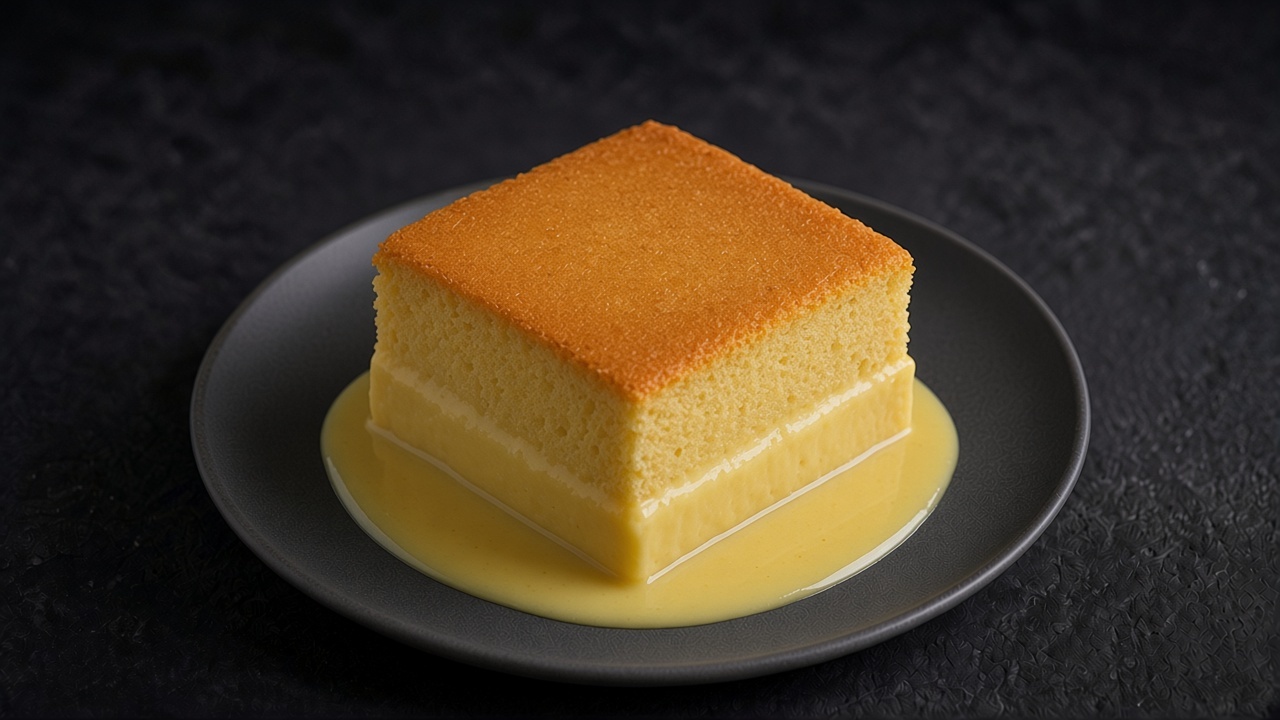
Lemon Pudding Cake
Inspired by techniques from America's Test Kitchen.
A light lemon sponge bakes on top while a tangy, curd-like sauce settles underneath, the two layers forming on their own as the whipped egg whites rise and the heavier batter sinks. Baking the dish inside a water bath keeps the heat gentle enough that the egg-rich batter sets into a tender cake instead of scrambling.
Always check the labels of the products you use.
Method
- 1
Mix the batter. Position a rack in the lower third of the oven and heat to 163°C / 143°C fan. Grease the baking dish with the softened butter or oil. Whisk the flour and cornstarch together in a small bowl. In a large bowl, beat 99 g of the sugar with the butter and lemon zest on medium-high speed until light and fluffy, about 2 min. Beat in the egg yolks one at a time until each is incorporated, then reduce the speed to medium-low, add the flour mixture and mix until just combined. With the mixer still running, slowly pour in the milk and lemon juice and mix until just combined.
- 2
Whip and fold in the whites. In a clean, dry bowl, beat the egg whites on medium-high speed until soft peaks form, about 2 min. With the mixer running, slowly add the remaining 149 g sugar and beat until the whites are firm and glossy, about 1 min more. Whisk one-third of the whites into the batter to loosen it, then gently fold in the rest in two more additions, stopping as soon as no white streaks remain.
- 3
Set up the water bath. Lay the kitchen towel in the bottom of the roasting pan and set the prepared baking dish on top of it. Spoon the batter into the dish and carefully set the pan on the oven rack. Pour the boiling water into the roasting pan until it comes halfway up the sides of the baking dish.
- 4
Bake and cool. Bake until the top is golden brown and the edges are set but the centre still jiggles slightly when the dish is nudged, about 60 min. Lift the baking dish out of the water bath and let it cool on the wire rack for at least 1 hour before serving; as it cools, the sponge settles on top of a pale, tangy lemon sauce.
Storage
Best served warm the day it's baked, while the sauce underneath is still soft. Refrigerate leftovers covered for up to 3 days and gently rewarm individual portions in a low oven or microwave. Cool leftovers in a shallow container and refrigerate within 2 hours (within 1 hour on a day above 32°C).
EU nutrition claims
- Low salt: 0.19 g salt per 100 g (limit ≤ 0.3 g)
Per 100 g of the finished dish, worked out from the nutrition per serving and the lowest likely cooked weight (about 83 g a serving), so the true values are, if anything, lower. Thresholds from the Annex to EU Regulation (EC) No 1924/2006. How we decide
Free sugars
31.3 g per serving
62.6 % of the 50 g daily maximum · 125.2 % of the ideal 25 g
Free sugars under 50 g a day, ideally about 25 g (WHO). The share shown is the share of one serving. WHO
Equipment
- electric mixer with whisk attachment
- 2 mixing bowls (one very clean and dry, for the egg whites)
- rubber spatula
- fine grater or zester
- citrus juicer
- 20 cm square baking dish
- kitchen towel
- large roasting pan
- kettle or saucepan, for boiling water
- wire cooling rack
Nutrition per serving (estimated values)
| Per serving | Amount |
|---|---|
| Energy | 278 kcal |
| Protein | 5.7 g |
| Carbohydrate | 38.3 g |
| of which sugars | 33.4 g |
| of which free sugars | 31.3 g |
| Fat | 12 g |
| of which saturates | 6.5 g |
| Fibre | 0.3 g |
| Salt | 0.16 g |
Protein per 100 kcal
2.1 g High Protein needs ≥ 5 g (20% of energy)
Calculated from USDA FoodData Central ingredient values