 Velvet
Kabocha Mash with Browned Butter
Inspired by techniques from Bon Appétit.
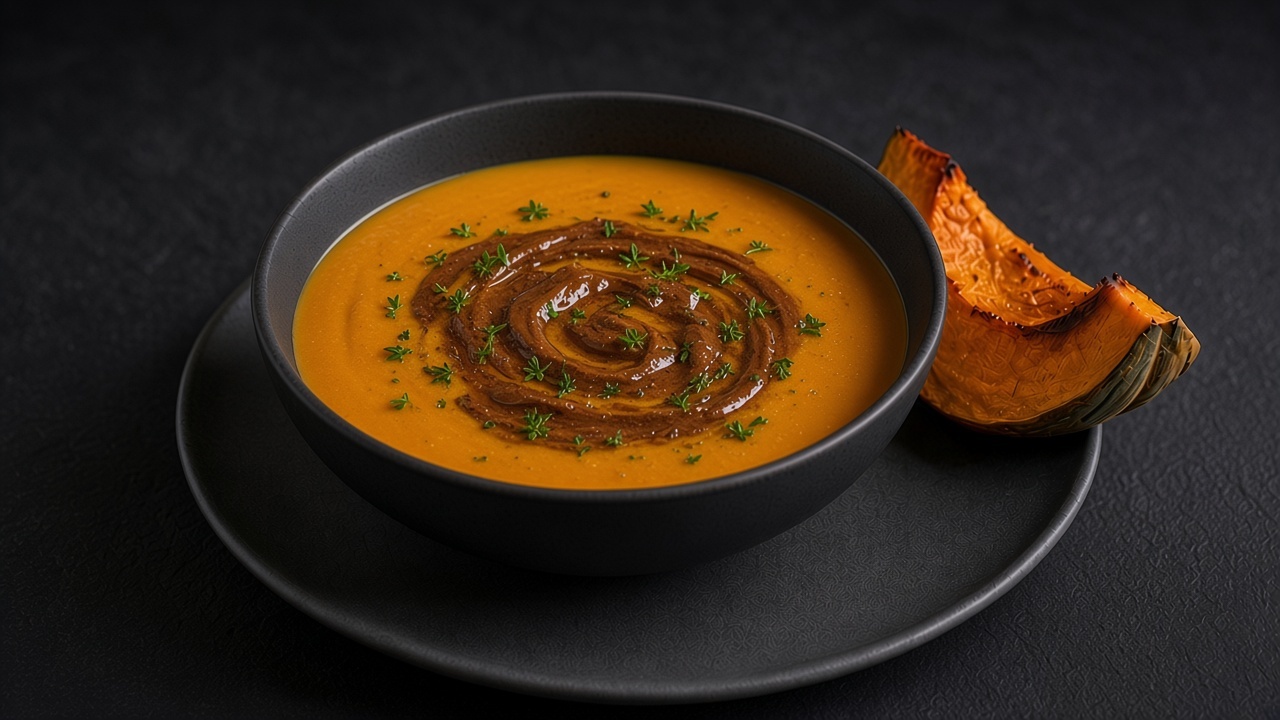
Roasted kabocha squash mashed with browned butter, garlic, thyme and chicken broth into a rich, savoury side. Roasting the halves until very soft makes the flesh easy to mash, while fresh parsley lifts the sweet squash and nutty butter.
Always check the labels of the products you use.
Method
- 1
Prepare the squash. Heat the oven to 180 °C (160 °C fan). Lightly spray the baking tray. Halve the squash crosswise and scrape out the seeds with a spoon. Pour 15 ml olive oil into each half and brush it over the exposed flesh, then set both halves cut side down on the tray.
- 2
Roast and mash. Roast for about 70 min, until a knife slips into the flesh with almost no resistance. Let the squash cool slightly so you can handle it, then spoon the flesh into the mixing bowl, leaving the skin behind. Mash until nearly smooth.
- 3
Brown the butter. Melt the butter in the frying pan over medium-high heat. Cook until it just starts to turn golden brown, about 2 min. Stir in the garlic and thyme and cook, stirring, for 1 min.
- 4
Make it smooth. Pour the butter mixture and 240 ml broth into the squash and mash until smooth. Stir in the salt and pepper, taste and add more in small pinches if needed. If making ahead, leave the parsley out and follow the holding and reheating advice below.
- 5
Finish with parsley. Stir 2 tbsp of the parsley into the warm mash. Spoon onto plates, scatter over the remaining 1 tbsp parsley and serve.
Storage
Refrigerate covered for up to 3 days. Reheat in the microwave, stirring occasionally, until piping hot and 74 °C throughout; loosen with a little more broth if needed. Cool leftovers in a shallow container and refrigerate within 2 hours (within 1 hour on a day above 32°C).
EU nutrition claims
- Low sugars: 2.5 g sugars per 100 g (limit ≤ 5 g)
Per 100 g of the finished dish, worked out from the nutrition per serving and the lowest likely cooked weight (about 150 g a serving), so the true values are, if anything, lower. Thresholds from the Annex to EU Regulation (EC) No 1924/2006. How we decide
Free sugars
Free sugars: 0 g per serving
0 % of the 50 g daily maximum · 0 % of the ideal 25 g
Free sugars under 50 g a day, ideally about 25 g (WHO). The share shown is the share of one serving. who.int/publications/i/item/9789241549028
Equipment
- oven
- chef's knife
- chopping board
- large rimmed baking tray
- pastry brush
- spoon
- large microwave-safe mixing bowl
- potato masher
- frying pan
- wooden spoon or heatproof spatula
- microwave (if making ahead)
- instant-read thermometer (if reheating)
Nutrition per serving (estimated values)
| Per serving | Amount |
|---|---|
| Energy | 207 kcal |
| Protein | 2.6 g |
| Carbohydrate | 15.1 g |
| of which sugars | 3.7 g |
| of which free sugars | 0 g |
| Fat | 16.6 g |
| of which saturates | 7.9 g |
| Fibre | 2.6 g |
| Salt | 0.54 g |
Protein per 100 kcal
1.3 g High Protein needs ≥ 5 g (20% of energy)
Calculated from USDA FoodData Central ingredient values