 Velvet
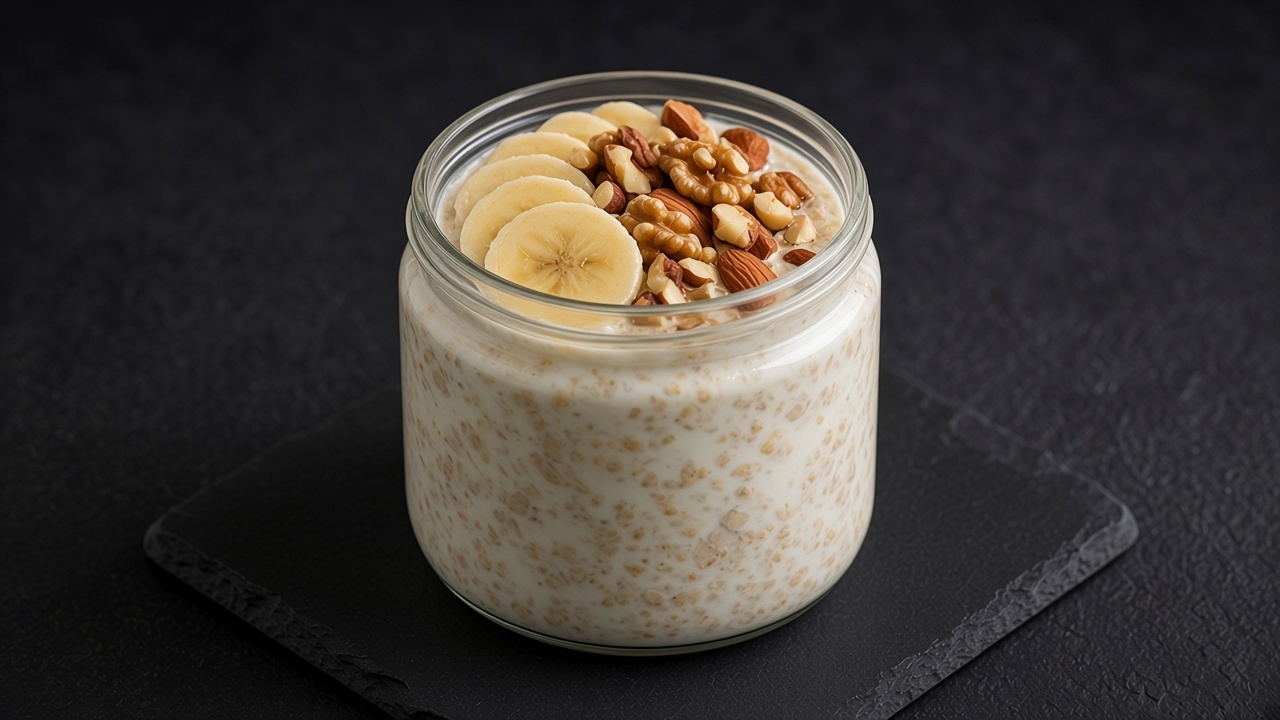
Greek Yogurt Overnight Oats
Inspired by techniques from Bon Appétit.
Old-fashioned oats soak overnight in Greek yogurt, non-dairy milk and a pinch of salt until thick, creamy and ready to eat cold straight from the fridge. Optional flaxseed and wheat bran add fibre and a nutty bite, and a splash more milk the next morning loosens it to whatever consistency you like.
Always check the labels of the products you use.
Method
- 1
Mix the oats. Combine the oats, yogurt, flaxseed (if using), wheat bran (if using), salt and almond milk in the bowl or jar. Stir well until no dry oats or flecks of bran cling to the sides. If you plan to top the oats with something sweet, stir in the agave syrup now.
- 2
Chill overnight. Cover tightly and refrigerate for at least 5 hours, and preferably 8-12 hours overnight, until the oats have softened and soaked up most of the liquid.
- 3
Loosen and top. The next day, stir in a splash more milk if the oats are thicker than you like, and let the jar sit at room temperature for a few minutes to take off the chill. Top as desired and serve.
Storage
Keeps covered in the refrigerator for up to 4 days; the oats carry on thickening the longer they sit, so stir in a little extra milk before serving if needed.
Why it's healthy
- Total fat: 29.6 % of energy (limit ≤ 30%)
- Saturated fat: 6.8 % of energy (limit < 10%)
- Free sugars: 9.1 % of energy (limit < 10%)
- Salt: 0.41 g (limit ≤ 1.7 g)
- Fibre or fruit & veg: 4 g fibre / 0 g veg (limit ≥ 2 g fibre or 80 g fruit & veg)
Per serving, worked out from the nutrition table against our WHO-based rule. Not endorsed by WHO.
EU nutrition claims
- Source of protein: 4.7 g protein per 100 kcal, about 19% of energy (needs ≥ 12%)
- Low saturated fat: 1 g saturated fat per 100 g, 6.8% of energy (limits ≤ 1.5 g and ≤ 10%)
- Low sugars: 4.6 g sugars per 100 g (limit ≤ 5 g)
- Source of fibre: 2.5 g fibre per 100 kcal (needs ≥ 1.5 g)
Per 100 g of the finished dish, worked out from the nutrition per serving and the lowest likely cooked weight (about 118 g a serving), so the true values are, if anything, lower. Thresholds from the Annex to EU Regulation (EC) No 1924/2006. How we decide
Free sugars
3.6 g per serving
7.2 % of the 50 g daily maximum · 14.4 % of the ideal 25 g
Free sugars under 50 g a day, ideally about 25 g (WHO). The share shown is the share of one serving. WHO
Equipment
- medium bowl, mason jar or lidded container (about 700 ml)
- measuring jug and spoons
- spoon for stirring
Nutrition per serving (estimated values)
| Per serving | Amount |
|---|---|
| Energy | 158 kcal |
| Protein | 7.4 g |
| Carbohydrate | 21.6 g |
| of which sugars | 5.5 g |
| of which free sugars | 3.6 g |
| Fat | 5.2 g |
| of which saturates | 1.2 g |
| Fibre | 4 g |
| Salt | 0.41 g |
Protein per 100 kcal
4.7 g High Protein needs ≥ 5 g (20% of energy)
Calculated from USDA FoodData Central ingredient values