 Velvet
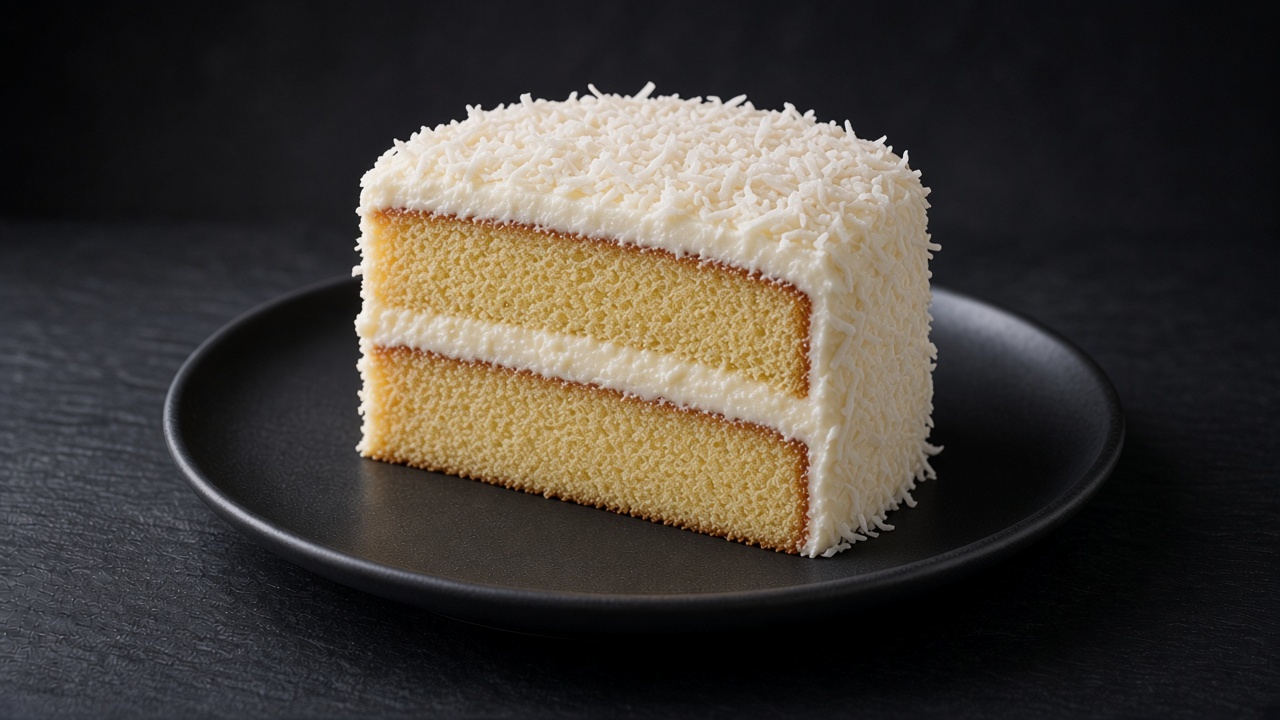
Coconut Layer Cake with Cream Cheese Frosting
Inspired by techniques from Bon Appétit.
Two buttery coconut cake layers filled and covered with vanilla cream cheese frosting and a soft coat of sweetened coconut. Buttermilk keeps the crumb tender, while folded egg whites give the rich batter a lighter texture.
Always check the labels of the products you use.
Method
- 1
Prepare the tins and mixtures. Heat the oven to 180 °C (160 °C fan). Coat both cake tins with the nonstick spray and line their bases with parchment rounds. Stir the flour and 113 g coconut together in the medium bowl. Whisk the buttermilk and baking soda together in the small bowl.
- 2
Cream the butter and sugar. In a large bowl, beat the granulated sugar and 227 g butter with the electric mixer until light and fluffy, about 2 min. Add the egg yolks and beat until combined.
- 3
Mix the batter. Beat in the flour mixture in three batches, alternating with the buttermilk mixture in two batches, so you start and finish with flour. Mix only until each addition is incorporated.
- 4
Fold in the whites. Wash and dry the beaters thoroughly. In the second large bowl, beat the egg whites with the salt until peaks form. Fold one-third into the cake batter with the flexible spatula until just combined, then gently fold in the rest in two batches. Divide the batter evenly between the prepared tins.
- 5
Bake and cool. Bake for about 35 min, until a cake tester inserted into the centre of each layer comes out clean. Leave the cakes in their tins on wire racks for 10 min. Run the small knife around the edges, turn the cakes onto the racks and carefully remove the parchment. Let them cool completely; allow about 4 hours overall for making and cooling the cake.
- 6
Make the frosting. In a large bowl, beat the icing sugar, cream cheese, remaining 113 g butter and alcohol-free vanilla extract with the electric mixer until smoothly blended.
- 7
Fill and coat. Set one cake layer on the serving plate with its flat side facing up. Measure 240 ml frosting into the jug and spread it over the layer with the palette knife. Set the second layer on top, also flat side up, and spread the remaining frosting over the top and sides. Sprinkle some of the 85 g coconut over the top and gently press the rest onto the sides.
- 8
Serve or make ahead. Serve once assembled, or cover with a cake dome and refrigerate for up to 1 day before serving. If refrigerated, let the cake stand at room temperature for 1 hour before cutting.
Storage
Refrigerate under a cake dome or in a covered container for up to 3 days. For making ahead, assemble up to 1 day before serving. Bring only the portion you plan to serve to room temperature for 1 hour. Cool leftovers in a shallow container and refrigerate within 2 hours (within 1 hour on a day above 32°C).
Free sugars
Free sugars: 85.7 g per serving
171.4 % of the 50 g daily maximum · 342.8 % of the ideal 25 g
Free sugars under 50 g a day, ideally about 25 g (WHO). The share shown is the share of one serving. who.int/publications/i/item/9789241549028
Equipment
- oven
- two 23 cm round cake tins, about 4 cm deep
- baking parchment rounds
- digital scales and measuring spoons
- measuring jug
- medium mixing bowl
- small mixing bowl
- two large mixing bowls
- whisk
- electric mixer with beaters
- flexible spatula
- cake tester or wooden skewer
- wire cooling racks
- small sharp knife
- palette knife
- serving plate
- cake dome
Nutrition per serving (estimated values)
| Per serving | Amount |
|---|---|
| Energy | 858 kcal |
| Protein | 8.4 g |
| Carbohydrate | 111.5 g |
| of which sugars | 88.9 g |
| of which free sugars | 85.7 g |
| Fat | 43.9 g |
| of which saturates | 28 g |
| Fibre | 2.6 g |
| Salt | 1.04 g |
Protein per 100 kcal
1 g High Protein needs ≥ 5 g (20% of energy)
Calculated from USDA FoodData Central ingredient values