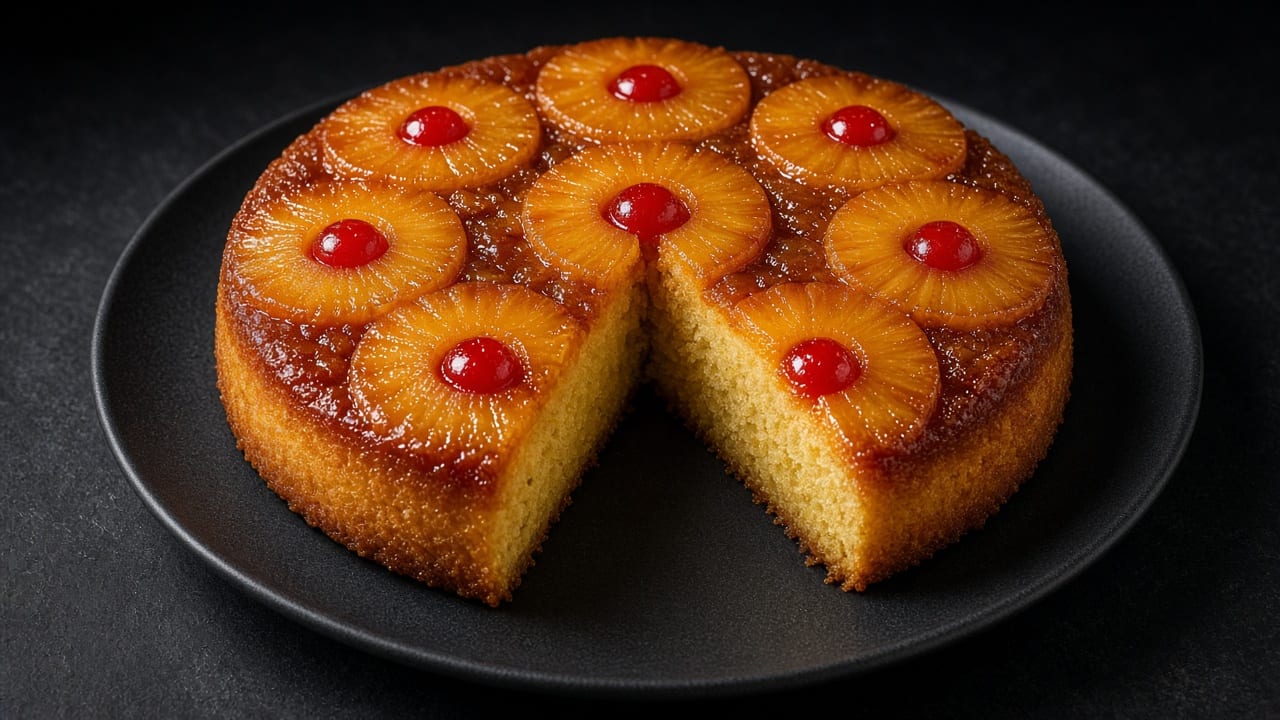
Classic Upside-Down Cake with Pineapple Rings and Cherries
Inspired by techniques from NYT Cooking and Serious Eats.
A classic American upside-down cake with a sticky brown-sugar pineapple and cherry topping sitting over a tender vanilla sponge, turned out so the glossy fruit ends up on top.
Always check the labels of the products you use.
Method
- 1
Preheat the oven. Heat the oven to 175°C (155°C fan) with a shelf set in the middle, giving it at least 20 minutes to come fully up to temperature before baking. Starting in properly hot air helps the sponge set and rise evenly rather than spreading at the edges while the centre lags behind. Use the wait to get the tin and ingredients ready.
- 2
Build the caramel base. Pour the melted butter into the base of the lined tin and scatter the brown sugar over it as evenly as you can. Pat the pineapple rings dry before laying them in a single snug layer, then set a cherry in the centre of each one. Removing surface juice first stops it diluting the sugar, so the caramel stays thick enough to turn glossy and sticky once baked.
- 3
Cream the butter and sugar. Beat the butter, caster sugar and salt together for 3-4 minutes, until noticeably pale and fluffy. Add the eggs one at a time, beating well between additions, then mix in the vanilla. This creaming stage works tiny air bubbles into the fat, which is what gives the baked sponge its lift.
- 4
Fold in flour and milk. On low speed, add the flour and baking powder in two additions, alternating with the milk, mixing only until the batter looks smooth. Stopping as soon as the streaks of flour disappear matters here, because overmixing develops gluten and can leave the crumb tough rather than tender.
- 5
Spoon batter over the fruit. Spoon the batter over the fruit in several dollops, then spread it out gently to the edges of the tin without pressing down. A light touch keeps the pineapple and cherries sitting undisturbed at the base, so the pattern stays neat once the cake is turned out.
- 6
Bake until golden. Bake for 40-45 minutes, until the top is golden, springs back when pressed lightly, and a skewer inserted into the centre comes out clean. By this point the egg and flour structure has fully set, so the sponge will hold its shape when flipped.
- 7
Cool for exactly 10 minutes. Leave the cake in its tin for exactly 10 minutes – no longer. The caramel underneath is still warm and fluid at this stage, which lets the fruit release cleanly; left any longer, it cools and sets, gripping the pineapple to the tin.
- 8
Turn out and serve. Run a knife around the edge to loosen the sponge, set a serving plate larger than the tin on top, then flip the whole thing over in one confident movement. Lift away the tin, and if any fruit has stayed behind, simply press it back into place. Serve the cake warm or at room temperature, caramel side up.
Storage
Keep leftovers covered at room temperature for up to 1 day, or in the fridge for up to 3 days. Well-wrapped slices freeze for up to 2 months; thaw at room temperature and warm gently in a low oven or microwave until just heated through before serving.
Equipment
- 23 cm round cake tin (5 cm deep, not loose-based), base-lined and greased
- small saucepan
- stand mixer or electric hand whisk
- serving plate larger than the tin
- skewer
Nutrition per serving (estimated values)
| Per serving | Amount |
|---|---|
| Energy | 331 kcal |
| Protein | 3.5 g |
| Carbohydrate | 44.8 g |
| of which sugars | 29.3 g |
| of which free sugars | 24.8 g |
| Fat | 15.7 g |
| of which saturates | 9.6 g |
| Fibre | 0.6 g |
| Salt | 0.44 g |
Protein per 100 kcal
1.1 g High Protein needs ≥ 10 g
Calculated from USDA FoodData Central ingredient values