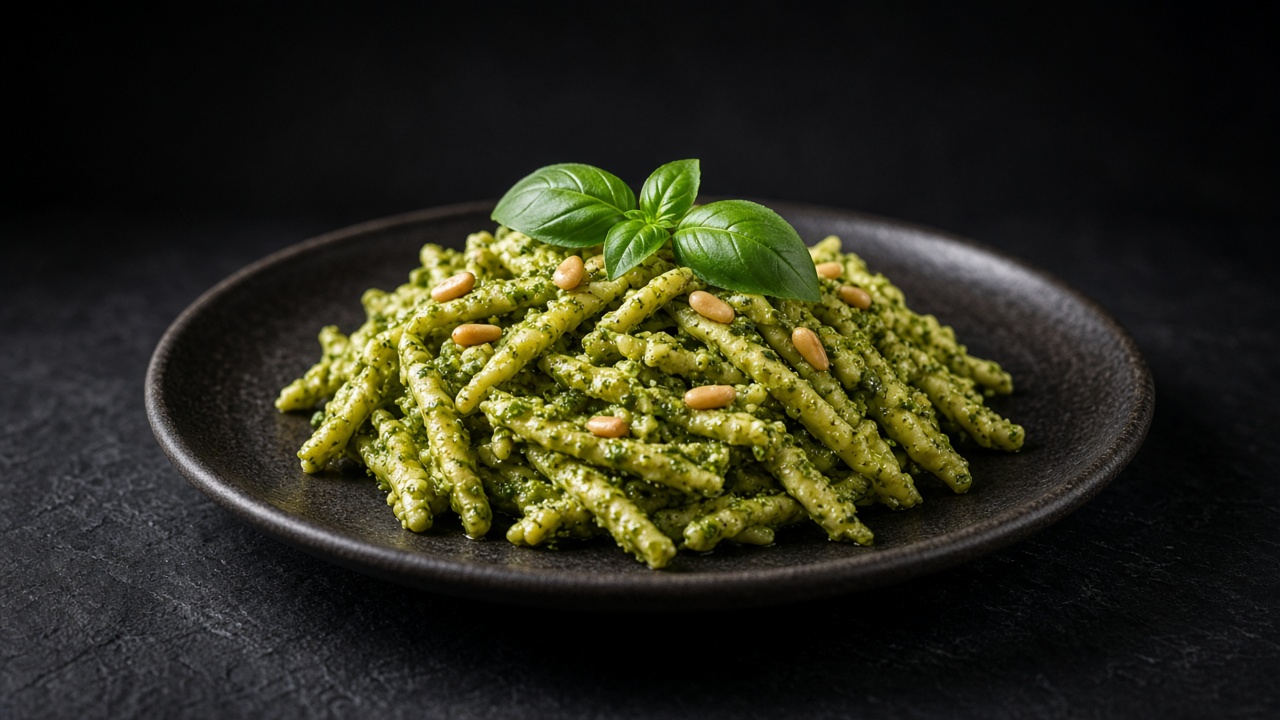
Hand-Rolled Trofie with Basil Pesto
Inspired by techniques from King Arthur Baking, Serious Eats and America's Test Kitchen.
Hand-twisted semolina pasta tossed with a classic basil, pine nut and Parmesan pesto, pounded rather than blitzed for the best texture and colour.
Always check the labels of the products you use.
Method
- 1
Make the dough. Mix the flour and semolina in a bowl, pour in the water, and stir to a rough, shaggy dough. Knead on the worktop for 8 minutes until it turns smooth and soft but not sticky - the semolina gives it enough structure to hold its shape later.
- 2
Rest the dough. Wrap the dough and leave to rest for 30 minutes. A rested dough relaxes enough to roll into thin threads without springing back, which makes shaping the trofie far easier.
- 3
Toast the pine nuts. Toast the pine nuts in a small dry frying pan over medium-low heat for 3-4 minutes, shaking the pan often, until they turn pale gold and smell nutty. Tip them onto a plate to cool - warm nuts turn oily when pounded, so let them cool first.
- 4
Pound the pesto. Using a mortar and pestle (or a small food processor), pound the garlic with a pinch of coarse salt until it breaks down to a paste, then work in the cooled pine nuts. Add the basil a handful at a time, pounding it against the sides rather than chopping, since bruising the leaves releases their oil without bringing out bitterness or discolouring them. Stir in both cheeses, then trickle in the olive oil, stirring until the pesto turns creamy, and tip it into a large serving bowl.
- 5
Shape the trofie. Pinch off pieces of dough about the size of a chickpea. On a clean, unfloured wooden board, roll each piece under the edge of your palm into a thread 4-5 cm long, then drag your palm diagonally back across it so it twists into a tight little spiral with tapered ends - the bare board's grip is what creates the twist, since flour would just let it slide. Spread the shapes on semolina-dusted trays as you go; you'll find a rhythm after the first dozen or so.
- 6
Cook the trofie. Bring 4 litres of water to the boil with the 32 g salt and add the trofie. Cook for 4-6 minutes, until tender but still pleasantly chewy at the centre. Reserve 240 ml of the cooking water before draining.
- 7
Toss with the pesto. Lift the trofie into the bowl of pesto along with 60 ml of the reserved water, and toss off the heat until the sauce turns glossy and creamy. Add more water a tablespoon at a time if it looks tight - heat is the enemy of good pesto, as it dulls the basil's colour and flavour, so this is done entirely away from the stove.
- 8
Serve. Divide between warm plates or bowls and finish with the extra grated Parmesan. Serve straightaway, while the pesto is still glossy.
Storage
Shaped, uncooked trofie can be frozen on a tray then bagged for up to 2 months and cooked straight from frozen. Leftover pesto keeps in the fridge for up to 3 days under a thin layer of olive oil; bring dressed pasta back to piping hot in a pan with a splash of water rather than microwaving, which can make the basil taste bitter. Cool leftovers in a shallow container and refrigerate within 2 hours (within 1 hour on a day above 32°C).
Equipment
- large bowl
- bench scraper
- wooden board
- 2 baking trays dusted with semolina
- mortar and pestle or small food processor
- small dry frying pan
- large heatproof serving bowl
- large pot (at least 5 litres)
- slotted spoon or spider strainer
Nutrition per serving (estimated values)
| Per serving | Amount |
|---|---|
| Energy | 594 kcal |
| Protein | 15.4 g |
| Carbohydrate | 60.3 g |
| of which sugars | 0.6 g |
| of which free sugars | 0 g |
| Fat | 32.4 g |
| of which saturates | 6.1 g |
| Fibre | 3 g |
| Salt | 1.18 g |
Protein per 100 kcal
2.6 g High Protein needs ≥ 10 g
Calculated from USDA FoodData Central ingredient values