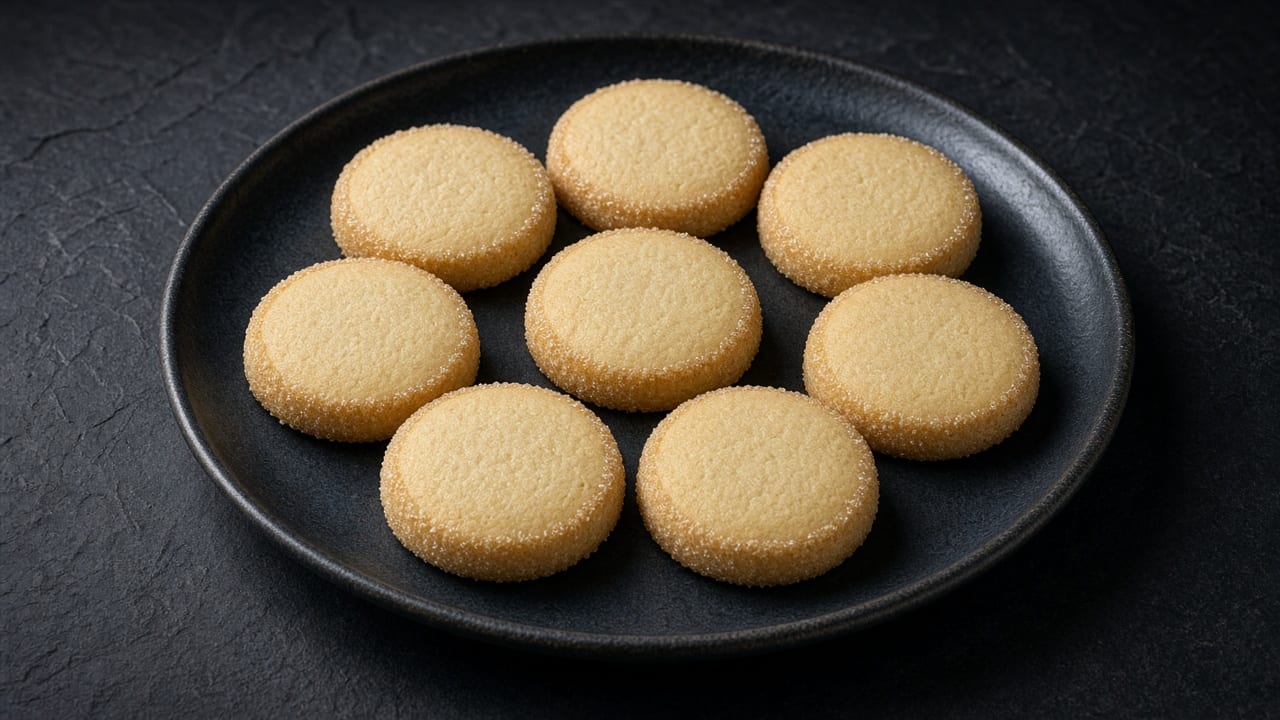
Sablés Diamants (French Butter Cookies)
Inspired by techniques from Serious Eats and NYT Cooking.
Crisp, buttery French sablés sliced from a chilled log and rolled in coarse sugar for a sparkling, crunchy edge - a simple make-ahead biscuit with a short, sandy crumb.
Always check the labels of the products you use.
Method
- 1
Cream the base. Beat the softened butter, icing sugar and salt on low-medium speed for just 1 minute, until smooth and creamy rather than light and fluffy. Keeping the mixing brief limits the air you beat in, which is what gives these biscuits their sandy, melt-in-the-mouth texture rather than a cakey one.
- 2
Add yolk and vanilla. Beat in the egg yolk and vanilla until fully combined and glossy. The yolk adds richness and a little structure without introducing the extra water a whole egg would bring, which keeps the dough short.
- 3
Bring in the flour. Add the plain flour on low speed and mix only until the dough just comes together. Overworking at this stage develops gluten and makes the biscuits tough, so stop as soon as no dry flour remains visible.
- 4
Shape and chill the logs. Divide the dough in two and roll each half into a log about 4cm thick on a lightly floured surface, then wrap tightly. Chill for at least 3 hours, or freeze for 1 hour, until very firm; a properly firm log slices cleanly into neat rounds instead of squashing out of shape.
- 5
Heat the oven. Heat the oven to 175°C (155°C fan) at least 20 minutes before baking, so it reaches a steady temperature by the time the biscuits go in. An oven that hasn't fully come up to heat bakes unevenly and can leave the biscuits pale and soft.
- 6
Coat in sugar. Brush the chilled logs all over with the lightly beaten egg white, then roll them in the demerara or coarse sugar, pressing gently so it sticks. This sugary coating is what gives sablés diamants their name, catching the light like tiny diamonds once baked.
- 7
Slice and space out. Slice the logs into rounds about 1cm thick and arrange them 3cm apart on the lined trays, as they will spread slightly as they bake. Even spacing stops the edges from baking into one another.
- 8
Bake until sandy-pale. Bake one tray at a time for 14-17 minutes, until the edges turn golden but the tops stay pale and sandy-looking. Baking only the edges to colour keeps the crumb short and prevents the biscuits from drying out in the centre.
- 9
Cool and set. Leave the biscuits on the tray for 5 minutes to firm up, then transfer to a wire rack to cool completely. They continue to crisp as they cool, so resist stacking them while still warm.
Storage
Store in an airtight tin at room temperature for up to 5 days. The unbaked dough logs can be frozen, well wrapped, for up to 2 months - slice and bake from frozen, adding a minute or two to the baking time.
Equipment
- 2 large metal baking trays lined with baking paper
- stand mixer or electric hand whisk
- pastry brush
- sharp knife
- wire rack
Nutrition per serving (estimated values)
| Per serving | Amount |
|---|---|
| Energy | 77 kcal |
| Protein | 0.9 g |
| Carbohydrate | 8.8 g |
| of which sugars | 3.5 g |
| of which free sugars | 3.4 g |
| Fat | 4.2 g |
| of which saturates | 2.6 g |
| Fibre | 0.2 g |
| Salt | 0.09 g |
Protein per 100 kcal
1.2 g High Protein needs ≥ 10 g
Calculated from USDA FoodData Central ingredient values