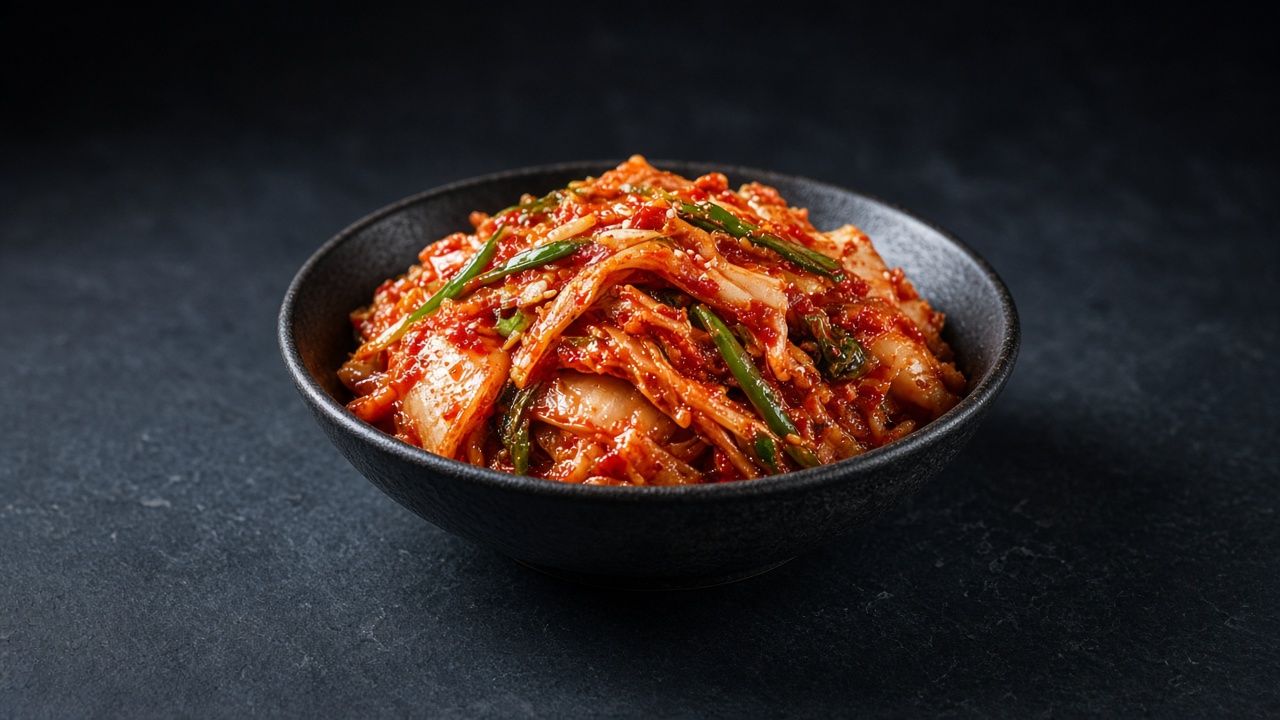
Napa Cabbage Kimchi
Inspired by techniques from America's Test Kitchen and Serious Eats.
Crunchy napa cabbage coated in a garlicky chilli, pear and ginger paste, fermented for a few days until tangy and lightly fizzy.
Always check the labels of the products you use.
Method
- 1
Salt the cabbage. Quarter the cabbage, cut out the core and cut the leaves into 5 cm pieces. Rinse them in cold water and drain, then layer them in the large bowl with the salt, a quarter at a time. Leave for 2 hours, tossing every 30 minutes, until the cabbage is limp and much reduced. The salt draws water out of the leaves, which seasons them and makes them pliable enough to soak up the paste.
- 2
Cook the rice paste. Whisk the rice flour into the water in the small pan and cook over medium heat, whisking constantly, for 2-3 minutes until smooth and thick like custard. Let it cool. This cooked starch helps the seasoning cling to every leaf and gives the good bacteria an easy early meal.
- 3
Blend the seasoning. In the food processor, blend the pear, chilli flakes, fish sauce, garlic, ginger and sugar to a coarse paste. Add the cooled rice paste and pulse a few times to combine. The pear brings gentle sweetness and moisture that balance the heat of the chilli.
- 4
Rinse and drain. Cover the cabbage with cold water, swish it around and drain in the colander. Repeat once more, then drain very well and squeeze gently. Rinsing twice removes the excess surface salt so the finished kimchi is seasoned, not harsh.
- 5
Coat everything. Put on the gloves and mix the cabbage, carrots and spring onions with the paste until every piece is evenly red. Gloves matter here, as the chilli can sting your skin for hours.
- 6
Pack the container. Press the kimchi firmly into the clean container to push out air pockets, leaving 5 cm of headspace at the top. Press cling film directly onto the surface and close the lid loosely, then set the container on the tray. A loose lid lets fermentation gases escape, and the tray catches any juices that bubble over.
- 7
Let it ferment. Leave at 18-21 °C, out of direct sun, for 2-5 days, pressing the kimchi down once a day with a clean spoon so it stays under its liquid. Start tasting on day 2; when it is pleasantly tangy and slightly fizzy, close the lid and move it to the fridge. Cold slows the bacteria right down, so the flavour keeps developing gently rather than racing ahead.
Storage
Keep tightly closed in the fridge for up to 2 months, always using a clean spoon. It grows more sour over time, which is perfect for cooking. Cool leftovers in a shallow container and refrigerate within 2 hours (within 1 hour on a day above 32°C).
Equipment
- very large bowl
- colander
- small saucepan
- whisk
- food processor
- disposable gloves
- 2500 ml glass or food-safe plastic container with lid
- cling film
- shallow tray
Nutrition per serving (estimated values)
| Per serving | Amount |
|---|---|
| Energy | 25 kcal |
| Protein | 1.2 g |
| Carbohydrate | 5.3 g |
| of which sugars | 2.1 g |
| of which free sugars | 0.5 g |
| Fat | 0.4 g |
| of which saturates | 0.1 g |
| Fibre | 1.7 g |
| Salt | 1.18 g |
Protein per 100 kcal
4.8 g High Protein needs ≥ 10 g
Calculated from USDA FoodData Central ingredient values