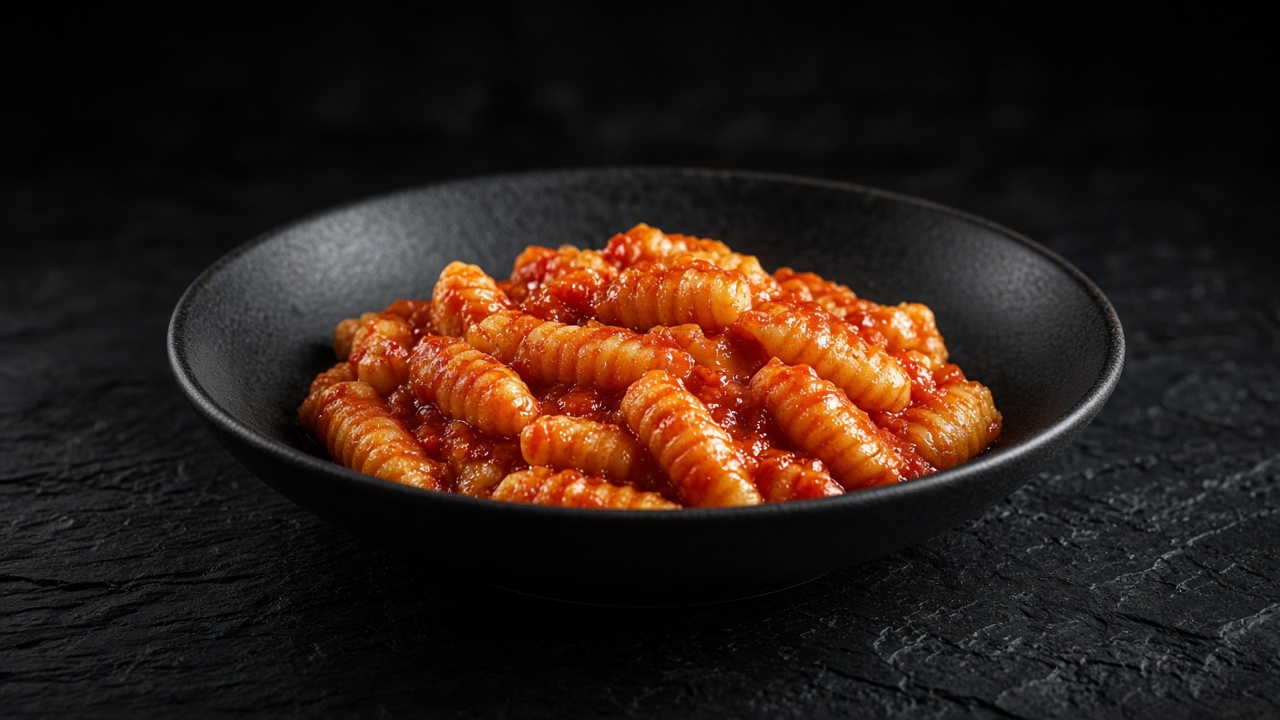
Malloreddus with Saffron Tomato Sauce
Inspired by techniques from Serious Eats and America's Test Kitchen.
A rustic Sardinian pasta of hand-shaped saffron semolina shells tossed in a simmered tomato sauce and finished with pecorino.
Always check the labels of the products you use.
Method
- 1
Soak the saffron. Crumble half the saffron threads into the 150 ml lukewarm water meant for the dough and leave it for 10 minutes. Warm water is enough to draw out both the colour and the perfume without needing any heat. By the time you mix the dough, the water should look golden and smell faintly of hay.
- 2
Mix the dough. Tip the semolina into a bowl and make a well in the centre, then pour in the saffron water and work it in with your fingertips. Keep stirring until everything clumps together into a rough mass, adding the extra 1-2 tbsp of water only if dry flour remains at the bottom. Semolina is thirsty but slow to absorb, so resist the urge to add more liquid than it needs.
- 3
Knead until smooth. Turn the dough onto a clean worktop and knead for 8-10 minutes. It starts out stiff and gritty but gradually turns smooth and firm as the semolina hydrates fully under the pressure of kneading. You'll know it's ready when it no longer looks speckled and springs back gently when poked.
- 4
Rest the dough. Wrap the dough and leave it to rest for 30 minutes at room temperature. This gives the semolina time to finish absorbing the water evenly, so the dough rolls and shapes without cracking at the edges.
- 5
Soften the onion. Warm the olive oil in a large frying pan and cook the onion over medium heat for 6-8 minutes, until soft and turning translucent. Add the garlic, chilli flakes and bay leaf and cook for 1 minute more, just long enough for the garlic's aroma to bloom in the oil without browning. This base is what gives the finished sauce its gentle sweetness.
- 6
Simmer the tomato sauce. Crush the tinned tomatoes by hand straight into the pan, then stir in the remaining saffron and the salt. Simmer gently for 25-30 minutes, until the sauce has thickened and reduced, stirring now and then so it doesn't catch on the bottom. Fish out and discard the bay leaf once the sauce tastes rounded and deep.
- 7
Shape the malloreddus. Cut the rested dough into 8 pieces, keeping the rest covered so it doesn't dry out, and roll each piece into a 1 cm rope on the bare worktop - no flour here, since the dough needs grip to roll properly. Cut the rope into 1 cm pieces, then press each one with your thumb and roll it down a gnocchi board or the back of a fork so it curls into a small ridged shell. Spread the shapes out on semolina-dusted trays as you go; the ridges and hollow centre are what will later hold the sauce.
- 8
Cook the malloreddus. Bring 4 litres of water to the boil with the 32 g salt, then add the malloreddus. Cook for 4-6 minutes, until they float and taste tender with just a little resistance at the centre - try one to check. Scoop out 240 ml of the cooking water before draining, since its starch will help the sauce cling.
- 9
Toss and serve. Lift the malloreddus straight into the sauce with a slotted spoon, along with 60 ml of the reserved water. Toss everything together over medium heat for 1 minute so the pasta finishes cooking in the sauce and takes on its colour. Serve immediately with the grated pecorino scattered over the top.
Storage
Cooked malloreddus in sauce will keep covered in the fridge for up to 3 days; reheat gently in a pan with a splash of water until piping hot throughout. Uncooked shaped pasta can be frozen on the trays, then bagged, for up to 2 months - cook from frozen, adding a minute or two to the time. Cool leftovers in a shallow container and refrigerate within 2 hours (within 1 hour on a day above 32°C).
Equipment
- large bowl
- bench scraper
- gnocchi board or the back of a fork
- 2 baking trays dusted with semolina
- large frying pan or sauté pan (30 cm)
- large pot (at least 5 litres)
- slotted spoon or spider strainer
Nutrition per serving (estimated values)
| Per serving | Amount |
|---|---|
| Energy | 424 kcal |
| Protein | 15 g |
| Carbohydrate | 67.1 g |
| of which sugars | 6.1 g |
| of which free sugars | 0 g |
| Fat | 10.8 g |
| of which saturates | 2.9 g |
| Fibre | 7.4 g |
| Salt | 2.13 g |
Protein per 100 kcal
3.5 g High Protein needs ≥ 10 g
Calculated from USDA FoodData Central ingredient values