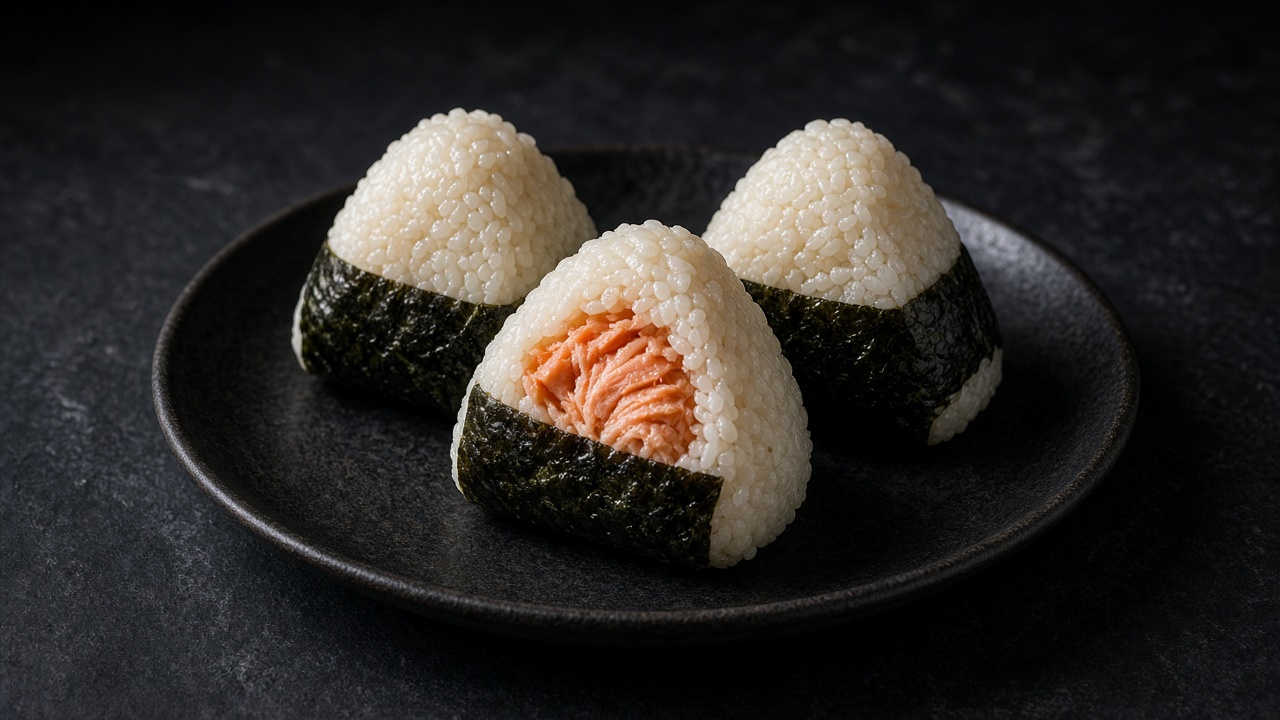
Japanese Rice Triangles with Flaked Salmon and Nori
Inspired by techniques from NYT Cooking and Serious Eats.
Hand-shaped Japanese rice triangles filled with flaked, oven-baked salmon and wrapped with a strip of nori. They're simple and portable, best eaten the same day while the rice is still soft.
Always check the labels of the products you use.
Method
- 1
Wash and soak the rice. Wash the rice in a large bowl, swishing it with your hand and pouring away the cloudy water, repeating 3-4 times until it runs mostly clear. Cover with fresh water and soak for 30 minutes, then drain in a sieve for 15 minutes. Washing removes excess surface starch so the cooked grains are tender rather than gluey, while soaking lets water penetrate the grain evenly before cooking.
- 2
Cook the rice. Tip the drained rice into the saucepan with the 560ml water, cover with a tight lid and bring to the boil over medium heat. Cook on low for 12-13 minutes until all the water has been absorbed, then leave covered off the heat for 10 minutes. This resting time lets the steam even out, so the rice is tender right through rather than wet in the middle.
- 3
Bake the salmon. Heat the oven to 220°C (200°C fan). Sprinkle the salmon with the salt and bake on the lined tray for 12-15 minutes, until it flakes easily when pressed and reaches 63°C in the thickest part. Let it cool slightly before flaking the flesh and discarding the skin; the salmon must be cooked through, never raw, before it goes anywhere near the rice.
- 4
Cool the rice slightly. Spread the cooked rice out on a tray and leave for about 10 minutes, just until you can comfortably hold it in your hands. Don't let it go cold, as cold rice loses its stickiness and won't hold together once shaped. Warm, slightly tacky rice is what gives onigiri their firm but tender bite.
- 5
Shape the rice around the filling. Wet your hands, then dip three fingertips into the salt and rub it over your palms. Take about an eighth of the rice, roughly 125g, make a hollow in the centre, add 1-2 tsp of flaked salmon, then close the rice over the filling. Press gently into a triangle with your cupped hand, turning it a few times, firm enough to hold its shape but not squashed; re-wet and re-salt your hands before shaping each one.
- 6
Wrap and finish. Wrap a strip of nori around the base of each triangle and sprinkle the top with sesame seeds. The salted hands season the outer layer of rice just enough that nothing extra is needed inside. Eat within 2 hours at room temperature, or wrap well and refrigerate within 1 hour if you're not eating straightaway.
Storage
Best eaten within 2 hours at room temperature. If not eating straightaway, wrap well and refrigerate within 1 hour, then eat within 24 hours; bring back to room temperature for up to 30 minutes before eating, as the rice firms up in the fridge.
Equipment
- large bowl
- sieve
- medium saucepan with a tight lid
- small baking tray lined with baking paper
- instant-read probe thermometer
- tray
- small bowl of water
Nutrition per serving (estimated values)
| Per serving | Amount |
|---|---|
| Energy | 458 kcal |
| Protein | 15.9 g |
| Carbohydrate | 80.1 g |
| of which sugars | 0.1 g |
| of which free sugars | 0 g |
| Fat | 6.7 g |
| of which saturates | 1.5 g |
| Fibre | 1.4 g |
| Salt | 1.53 g |
Protein per 100 kcal
3.5 g High Protein needs ≥ 10 g
Calculated from USDA FoodData Central ingredient values