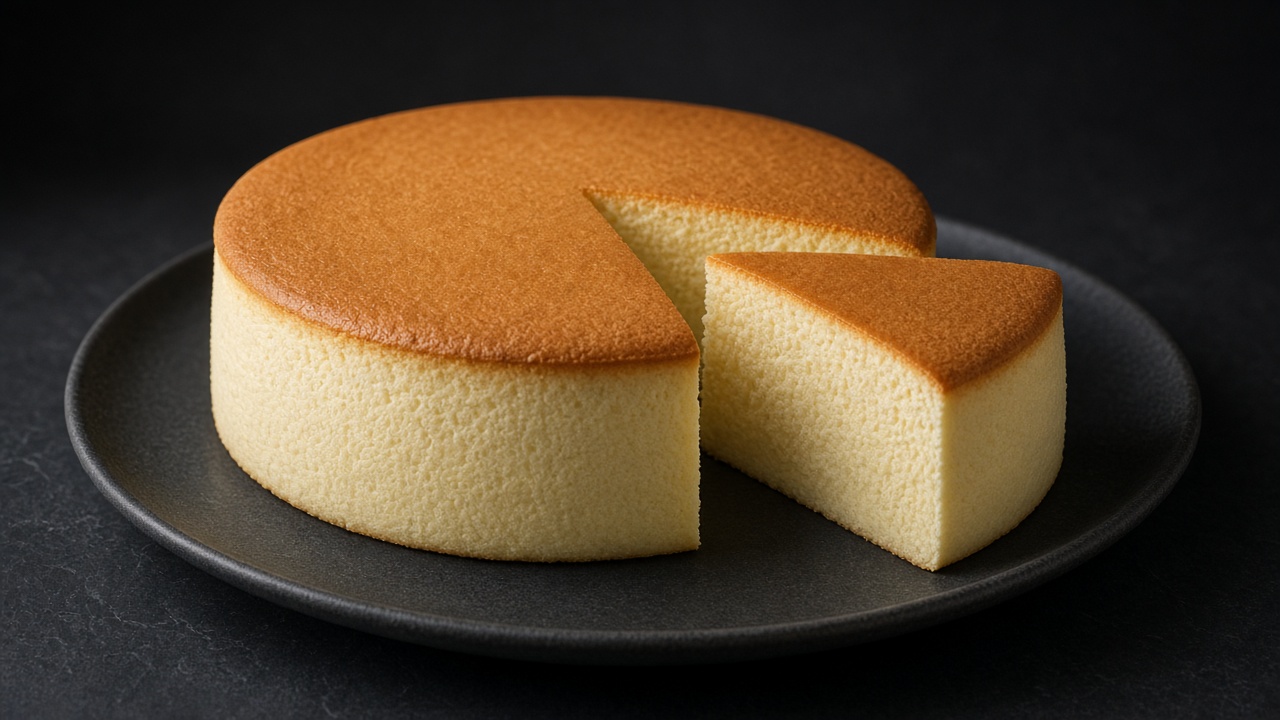
Japanese Cotton Cheesecake
Inspired by techniques from King Arthur Baking, NYT Cooking and Serious Eats.
A tall, pale, wonderfully light cheesecake baked in a water bath, with a meringue folded through to give it its signature cottony, wobbly texture.
Always check the labels of the products you use.
Method
- 1
Heat the Oven. Heat the oven to 160°C (140°C fan, though conventional heat suits this cake better) for at least 20 minutes, with a shelf set in the lower third. A steady, moderate heat is essential for a cake this delicate to rise evenly without cracking.
- 2
Melt the Cheese Base. Set a heatproof bowl over a pan of barely simmering water and whisk the cream cheese, butter, milk and sugar together until completely smooth and glossy. The gentle heat melts everything together without scrambling it, so the base blends with no lumps.
- 3
Add Yolks and Flours. Off the heat, whisk in the egg yolks one at a time, then sift in the cake flour and cornflour and whisk until smooth. Pass the mixture through a sieve into a large bowl, which catches any small curds that would otherwise spoil the cake's fine texture, then whisk in the lemon zest, lemon juice and salt.
- 4
Whisk the Meringue. Whisk the egg whites with the cream of tartar until foamy, then add the sugar gradually, whisking only to soft-medium peaks that curl gently over at the tip. A softer meringue like this stops the cake rising too fast and splitting, which is the usual problem with a stiffer one.
- 5
Fold Together. Whisk a third of the meringue into the cheese base to loosen it, then fold in the rest in two additions using a balloon whisk, working gently until no white streaks remain.
- 6
Fill the Tin. Pour the batter into the lined tin and tap it twice on the worktop to burst any large bubbles sitting near the surface.
- 7
Bake in a Water Bath. Stand the tin in the roasting tin, pour in hot water to a depth of about 2cm, then bake for 20 minutes before lowering the temperature to 140°C (120°C fan) and baking for a further 50-55 minutes. The cake should be well risen, golden on top and spring back when lightly pressed.
- 8
Cool Slowly. Turn off the oven and leave the cake inside for 15 minutes with the door ajar, so it cools gradually instead of collapsing from a sudden change in temperature. Lift it out, cool for a further 10 minutes, then unmould onto a plate.
- 9
Glaze and Serve. Brush the top with warm, sieved apricot jam if using, for a light sheen. Eat it warm while it's at its airiest, or chill for 3 hours for a denser, creamier slice.
Storage
Keep covered in the fridge for up to 3 days; serve chilled or bring back to room temperature as you prefer. It's best eaten within a day or two, as the airy texture firms up the longer it sits.
Equipment
- 20 cm round cake tin at least 7.5 cm deep (not loose-based), base and sides lined with baking paper standing 5 cm above the rim
- roasting tin
- heatproof bowl and saucepan for a bain-marie
- fine sieve
- stand mixer or electric hand whisk
- balloon whisk
- kettle
Nutrition per serving (estimated values)
| Per serving | Amount |
|---|---|
| Energy | 249 kcal |
| Protein | 6.1 g |
| Carbohydrate | 21.4 g |
| of which sugars | 14.4 g |
| of which free sugars | 12.8 g |
| Fat | 15.8 g |
| of which saturates | 8.8 g |
| Fibre | 0.1 g |
| Salt | 0.38 g |
Protein per 100 kcal
2.4 g High Protein needs ≥ 10 g
Calculated from USDA FoodData Central ingredient values