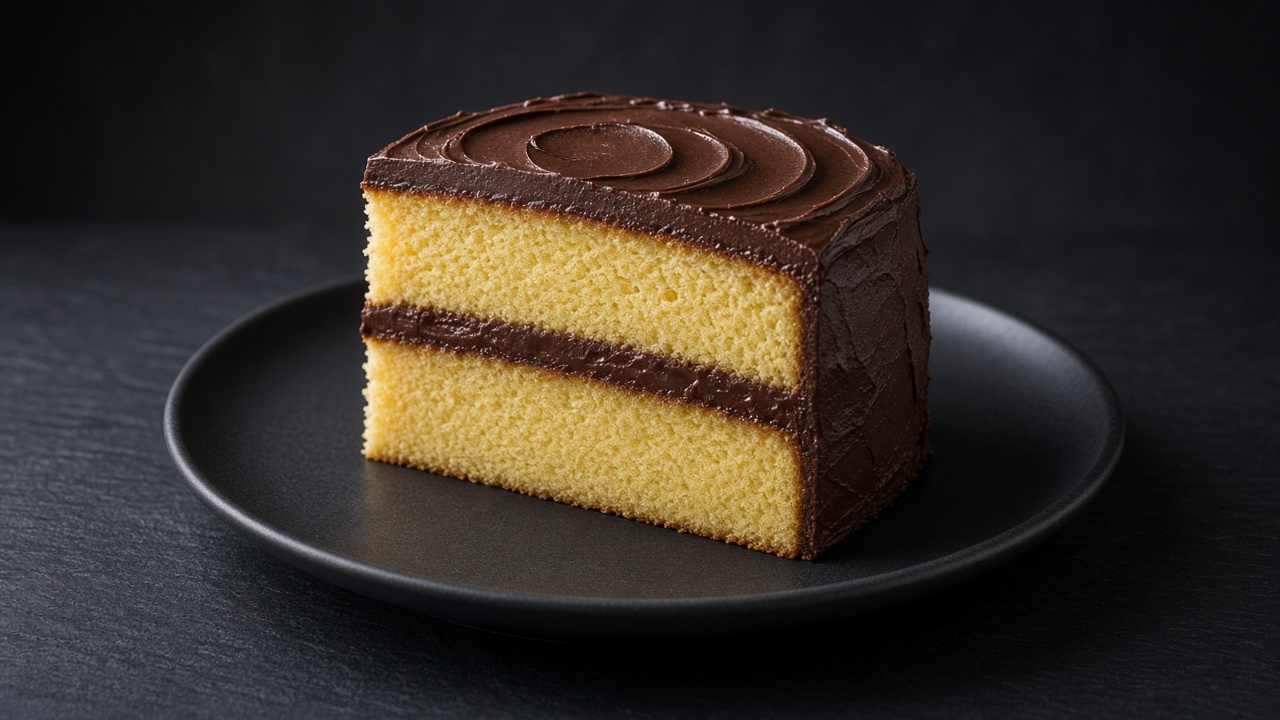
Yellow Butter Layer Cake with Chocolate Frosting
Inspired by techniques from King Arthur Baking and NYT Cooking.
A tender, buttery yellow layer cake built by the reverse-creaming method, sandwiched and covered with a rich, fluffy chocolate frosting.
Always check the labels of the products you use.
Method
- 1
Heat the Oven. Heat the oven to 175°C (155°C fan) for at least 20 minutes before baking, with a shelf set in the middle.
- 2
Warm Everything Up. Make sure the butter, milk, eggs and egg yolks are all at room temperature before you start. A reverse-creamed batter in particular needs everything at a similar temperature so it comes together smoothly rather than curdling.
- 3
Reverse-Cream the Butter In. Mix the flour, sugar, baking powder and salt on low speed, then add the softened butter a cube at a time, mixing on low until it looks like damp sand. Coating the flour with fat before any liquid goes in limits how much gluten develops, which is what gives this cake its fine, tender crumb.
- 4
Add the Wet Ingredients. Whisk together the milk, eggs, egg yolks and vanilla. Add half to the dry mixture and beat on medium speed for 1 minute to build a little structure, then scrape down the bowl and add the rest in two more additions, mixing just until smooth each time.
- 5
Divide and Bake. Weigh the batter into the two tins so the layers rise evenly, level the tops, then bake for 28-34 minutes. Look for cakes that are golden, spring back when touched and are just pulling away from the sides, with a skewer coming out clean.
- 6
Cool Completely. Cool the cakes in their tins for 10 minutes, then turn out onto wire racks to cool fully before frosting. Frosting a warm cake will simply melt the butter in the icing, and it will slide straight off.
- 7
Make the Chocolate Frosting. Beat the butter on its own for 3 minutes until noticeably pale and fluffy. Beat in the icing sugar and cocoa powder on low speed, then add the cooled melted chocolate, milk, vanilla and salt, and beat for 2 minutes more until light and spreadable.
- 8
Assemble the Cake. Level the tops of the cooled cakes if they've domed. Sandwich the layers with a third of the frosting, spread a thin crumb coat over the top and sides, then chill for 15 minutes before covering with the remaining frosting and swirling it to finish.
Storage
Keep the frosted cake covered at room temperature for up to 2 days, or in the fridge for up to 5 days, bringing slices back to room temperature before serving. Unfrosted sponges freeze well, wrapped tightly, for up to 2 months.
Equipment
- two 20 cm round cake tins (5 cm deep), greased and base-lined
- stand mixer or electric hand whisk
- wire racks
- palette knife
- serrated knife (optional)
Nutrition per serving (estimated values)
| Per serving | Amount |
|---|---|
| Energy | 674 kcal |
| Protein | 7.6 g |
| Carbohydrate | 86.4 g |
| of which sugars | 57.8 g |
| of which free sugars | 56 g |
| Fat | 35 g |
| of which saturates | 21.1 g |
| Fibre | 3.4 g |
| Salt | 0.84 g |
Protein per 100 kcal
1.1 g High Protein needs ≥ 10 g
Calculated from USDA FoodData Central ingredient values