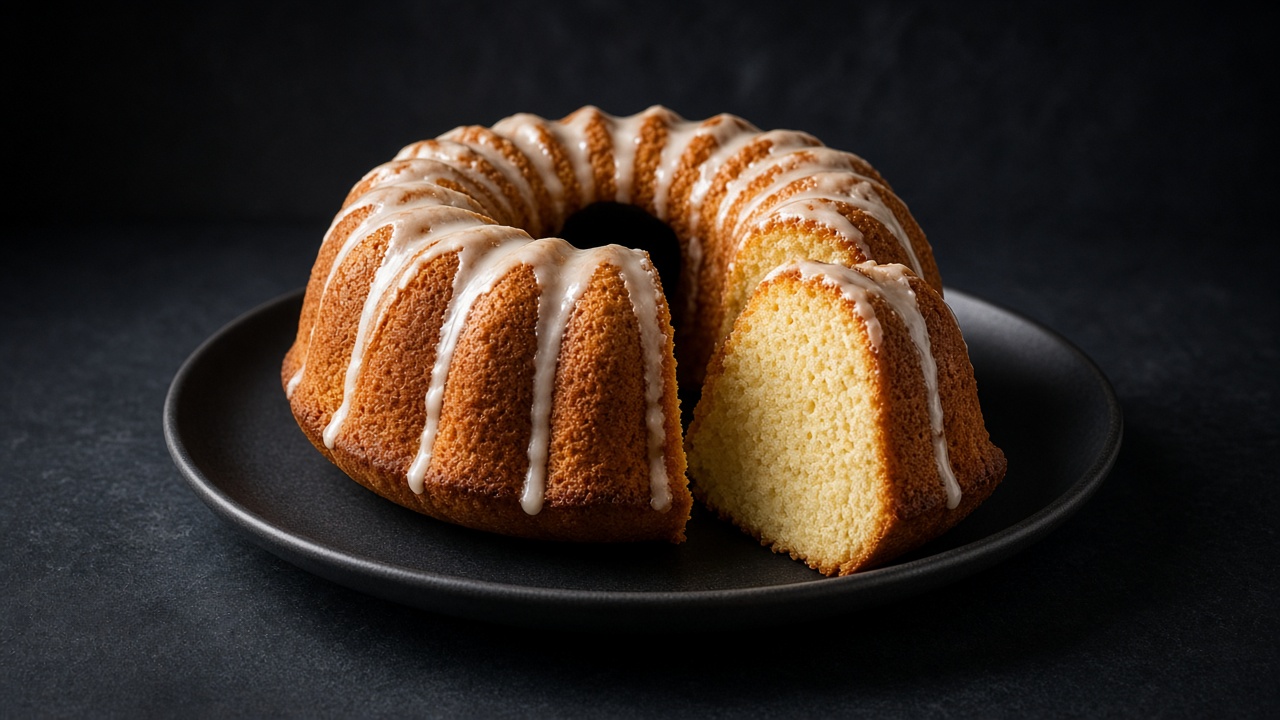
Vanilla Bundt Cake with Glaze
Inspired by techniques from NYT Cooking and King Arthur Baking.
A tall, ridge-patterned vanilla cake finished with a simple pourable glaze.
Always check the labels of the products you use.
Method
- 1
Heat the oven. Heat the oven to 165°C (145°C fan) for at least 20 minutes before baking, with a shelf in the lower-middle position. This tin holds a large volume of batter, so a fully heated oven is important for even baking right through to the centre.
- 2
Prepare the tin thoroughly. Brush soft butter (or a flavourless oil) into every ridge and groove of the tin, dust it all over with flour, then tip out the excess. A non-stick baking spray works even better if you have one, since butter can sometimes make the cake stick. A Bundt tin's decorative ridges are exactly where a cake is most likely to stick, so missing even a small section can tear the pattern when it's turned out.
- 3
Cream the butter and sugar. Beat the butter, sugar and salt for 4-5 minutes until pale and fluffy, then beat in the eggs one at a time, mixing well after each, followed by the vanilla. Adding the eggs individually keeps the mixture emulsified rather than curdled, holding on to the air worked in during creaming.
- 4
Alternate dry and wet. Whisk the flour, baking powder and bicarbonate of soda together, then add it to the butter mixture in three parts, alternating with the soured cream in two additions, starting and finishing with the flour; mix on low just until smooth. Starting and ending with the dry ingredients keeps the batter from splitting, while the soured cream adds moisture and a gentle tang without making it too loose to hold its ridged shape.
- 5
Fill and settle the batter. Spoon the batter into the tin, level it off, then tap the tin firmly on the worktop a few times. Tapping settles the thick batter into every groove and knocks out large air pockets that would otherwise show up as holes once baked.
- 6
Bake until golden. Bake for 55-65 minutes, until the top is golden, it springs back when pressed, and a skewer pushed into the thickest part comes out clean. Because the central tube means no part of the batter is ever far from the hot tin, this shape bakes a large cake evenly without the centre lagging behind.
- 7
Cool, then turn out. Leave the cake in the tin for 10 minutes — long enough to firm up, but not so long that it starts to stick as it cools — then invert it onto a wire rack and leave to cool completely. Turning it out at that point catches the moment it has set but hasn't yet gripped the tin again.
- 8
Glaze and serve. Whisk the icing sugar, milk and vanilla together to a thick but pourable glaze, then spoon it over the top of the cooled cake so it runs down into the ridges. Waiting until the cake is fully cool means the glaze sets into a defined coating instead of melting into the crumb.
Storage
Store under a cake dome or in an airtight container at room temperature for up to 4 days, or in the fridge for up to a week. Freeze un-glazed for up to 3 months, wrapped tightly, then glaze after thawing.
Equipment
- 2.5-litre Bundt tin
- pastry brush
- stand mixer or electric hand whisk
- fine sieve
- wire rack
- skewer
Nutrition per serving (estimated values)
| Per serving | Amount |
|---|---|
| Energy | 400 kcal |
| Protein | 4.9 g |
| Carbohydrate | 55.2 g |
| of which sugars | 36.4 g |
| of which free sugars | 35.6 g |
| Fat | 18 g |
| of which saturates | 10.5 g |
| Fibre | 0.6 g |
| Salt | 0.55 g |
Protein per 100 kcal
1.2 g High Protein needs ≥ 10 g
Calculated from USDA FoodData Central ingredient values