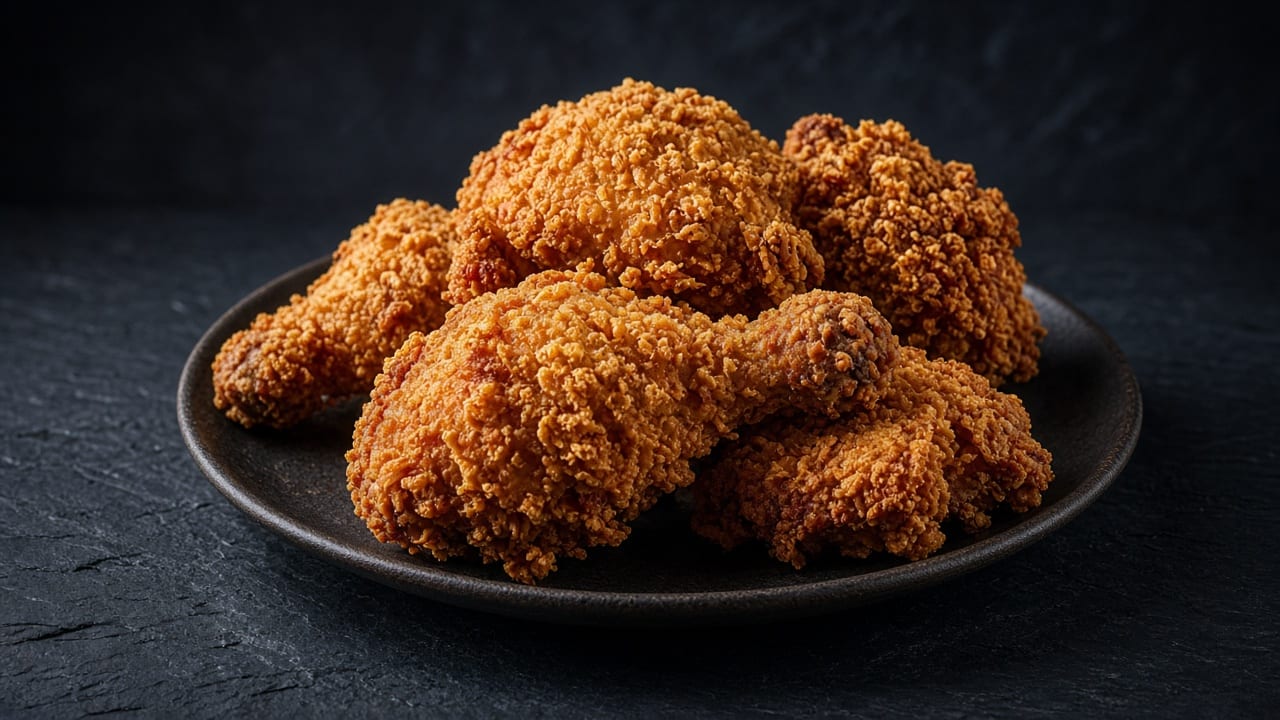
Southern Fried Chicken
Inspired by techniques from Serious Eats and America's Test Kitchen.
Bone-in chicken thighs and drumsticks are dry-brined, double-dredged and fried in a heavy pan for a thick, craggy, deeply seasoned crust.
Always check the labels of the products you use.
Method
- 1
Season and dry-brine. Rub the chicken pieces all over with salt, garlic powder and paprika, then leave them uncovered in the fridge for at least 2 hours, or ideally overnight. This seasons the meat deep inside rather than just on the surface. It also dries the skin slightly, which helps the coating stick and crisp later.
- 2
Mix flour and egg wash. Whisk together the seasoned flour ingredients in one bowl, and beat the eggs with the milk in another. Having both stations ready before you start coating keeps the process quick and your hands cleaner.
- 3
Dredge in stages. Coat each piece first in flour, then dip into the egg wash, then back into the flour, pressing firmly so it clings in a thick, even layer. Rest the coated pieces on a rack for 15 minutes before frying. This resting time lets the flour hydrate and bind to the surface, so the crust holds together in hot oil instead of flaking off.
- 4
Heat the oil. Pour oil into a heavy pot or deep cast-iron pan to a depth of 4-5 cm and heat to 175°C, checking with a frying thermometer. A heavy pan holds its heat steadily once the chicken goes in, which matters more here than the exact starting number.
- 5
Fry in batches. Fry 4 pieces at a time, starting with the dark meat, with the lid off. Expect the oil to drop to 150-160°C once the chicken is added; turn the pieces every 3-4 minutes and fry for 13-16 minutes in total. The steadier, slightly lower temperature after the drop lets the thick coating and bone-in meat cook through together without the crust burning first.
- 6
Check doneness and drain. Fry until the crust is deep golden brown and a thermometer in the thickest part of the thigh reads 77-80°C. Lift onto a wire rack over a tray to drain, keeping cooked pieces in a 100°C oven while you fry the rest. Dark meat is safe from 74°C, but taking it a little higher melts more connective tissue, leaving the meat noticeably more tender.
- 7
Season and serve. Sprinkle the pieces lightly with salt as soon as they come off the rack. Salting while the crust is still hot and slightly oily helps it stick evenly rather than sliding straight off.
Storage
Cool leftover fried chicken quickly and keep in the fridge for up to 3 days, or freeze for up to 2 months. Reheat in a hot oven rather than the microwave to keep the crust crisp, until piping hot and 74°C in the centre. Cool leftovers in a shallow container and refrigerate within 2 hours (within 1 hour on a day above 32°C).
Equipment
- large heavy cast-iron or deep frying pan (28-30 cm) or heavy pot
- frying thermometer
- wire rack set over a tray
- tongs
- instant-read thermometer
- 2 wide shallow bowls
Nutrition per serving (estimated values)
| Per serving | Amount |
|---|---|
| Energy | 809 kcal |
| Protein | 39 g |
| Carbohydrate | 24.1 g |
| of which sugars | 1.8 g |
| of which free sugars | 0 g |
| Fat | 61.1 g |
| of which saturates | 12.1 g |
| Fibre | 1.2 g |
| Salt | 2.46 g |
Protein per 100 kcal
4.8 g High Protein needs ≥ 10 g
Calculated from USDA FoodData Central ingredient values