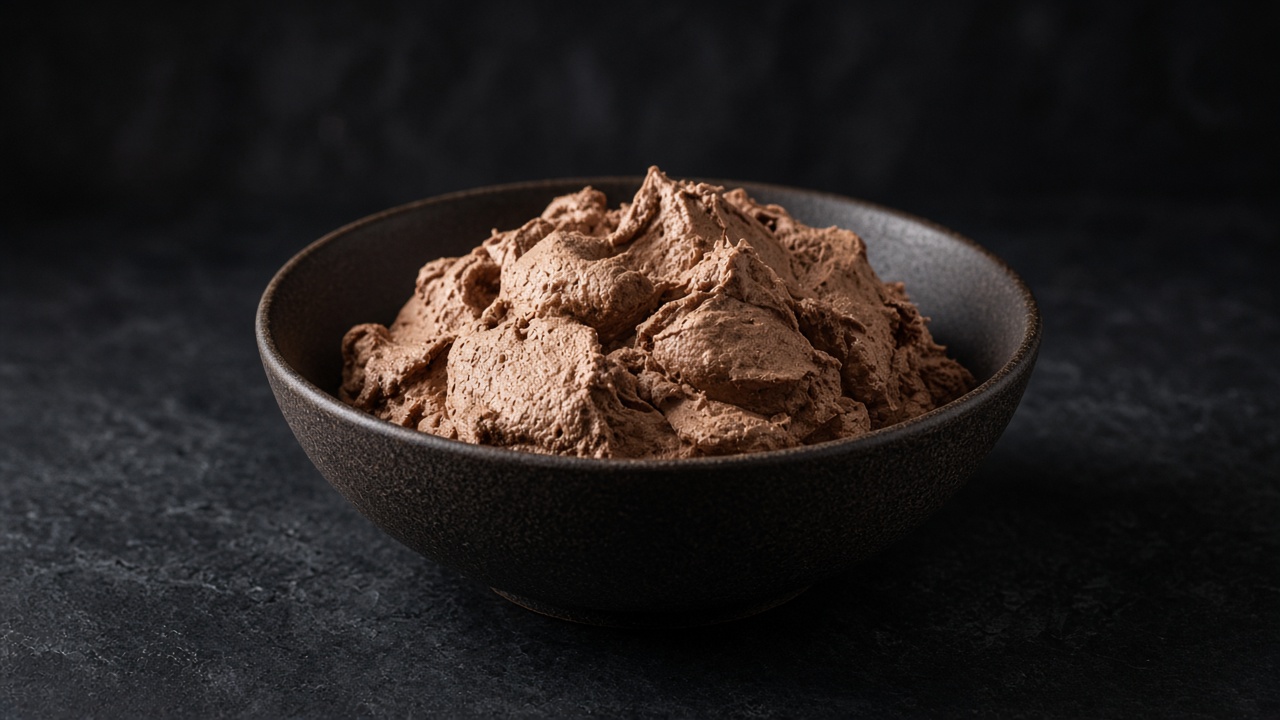
Silky Dark Chocolate Mousse
Inspired by techniques from America's Test Kitchen and Serious Eats.
A deep, airy dark chocolate mousse made the classic way with whipped egg whites and cream, set in the fridge.
Always check the labels of the products you use.
Method
- 1
Melt. put the chocolate, cocoa, espresso powder and hot water in the heatproof bowl over a pan of barely simmering water and stir until smooth. Take off the heat. Gentle heat keeps the chocolate smooth; too much heat makes it grainy.
- 2
Yolks. whisk the yolks with 1 tbsp of the sugar and the salt for 30 s until a little paler, then stir in the warm chocolate until glossy. Leave 5 min until just warm. Yolks make the mousse rich and help it set.
- 3
Whites. whisk the whites to soft foam, add the rest of the sugar and whisk to soft peaks. Stir a quarter into the chocolate to loosen it, then fold in the rest until only faint streaks remain. Loosening first means the rest of the whites keep their air.
- 4
Cream. whip the cream to soft peaks and fold it in until the mousse is evenly brown. Soft peaks fold in easily; stiff cream makes the mousse grainy.
- 5
Chill. spoon into the bowls, cover and chill at least 3 h, until set. Dust with cocoa to serve. As the chocolate firms, the mousse sets.
Storage
Keep covered in the fridge and eat within 2 days. Do not freeze.
Equipment
- heatproof bowl
- small saucepan
- 2 mixing bowls
- whisk
- electric whisk
- silicone spatula
- 6 small bowls or glasses
- cling film
- instant-read thermometer
- fine sieve
Nutrition per serving (estimated values)
| Per serving | Amount |
|---|---|
| Energy | 400 kcal |
| Protein | 7.2 g |
| Carbohydrate | 22.6 g |
| of which sugars | 14.3 g |
| of which free sugars | 13 g |
| Fat | 31.8 g |
| of which saturates | 18.7 g |
| Fibre | 4.1 g |
| Salt | 0.2 g |
Protein per 100 kcal
1.8 g High Protein needs ≥ 10 g
Calculated from USDA FoodData Central ingredient values