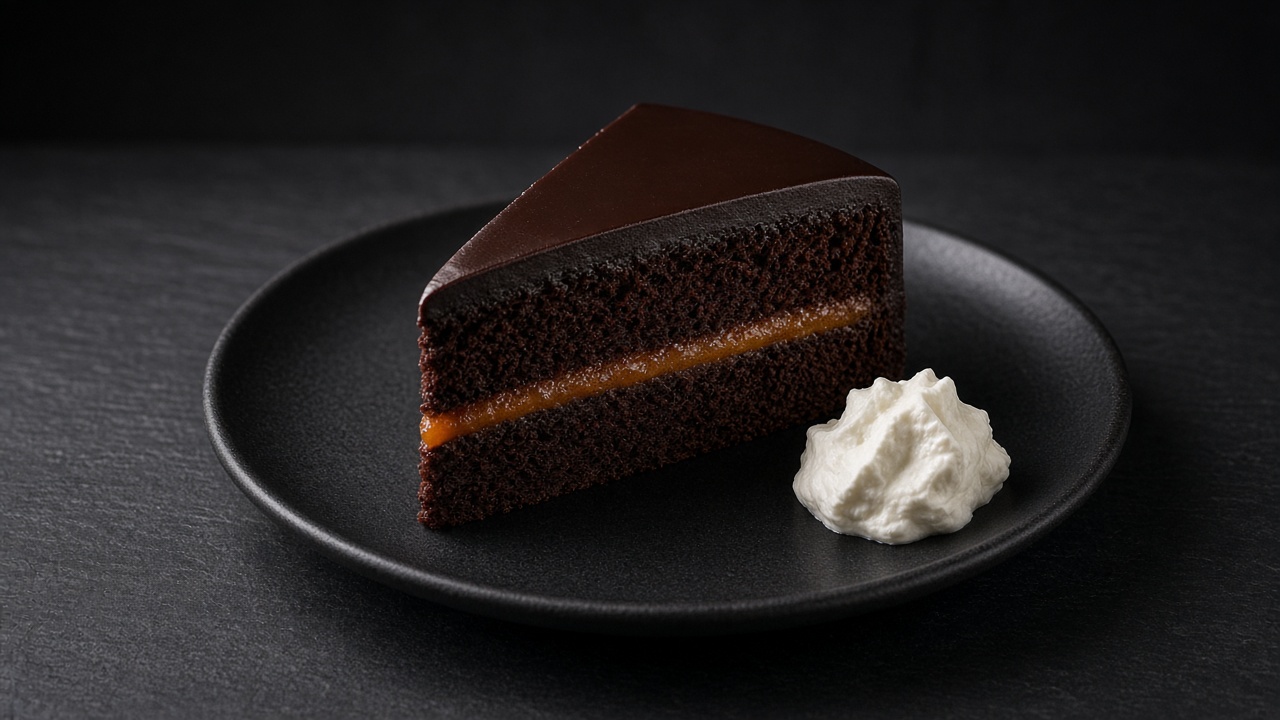
Sachertorte
Inspired by techniques from NYT Cooking.
A dense Viennese chocolate cake split with a thin layer of apricot jam and finished with a glossy poured chocolate glaze.
Always check the labels of the products you use.
Method
- 1
Melt the chocolate. Heat the oven to 170°C (150°C fan) for at least 20 minutes and grease and base-line the 23 cm springform tin. Melt the chocolate in a heatproof bowl set over barely simmering water, then set it aside to cool to warm. Melting it gently like this keeps the chocolate smooth and stops it seizing before it goes into the batter.
- 2
Beat the butter and yolks. Beat the butter, icing sugar and salt together for 3 minutes until pale and creamy. Beat in the egg yolks one at a time so each is fully absorbed before the next goes in, then beat in the cooled chocolate and vanilla. Adding the yolks gradually keeps the mixture stable rather than curdling into separate pools of fat and egg.
- 3
Whisk and fold the whites. Whisk the egg whites to soft peaks, then add the caster sugar gradually, whisking until the meringue is glossy and holds a medium-firm peak. Fold a third of this meringue into the chocolate mixture to loosen it, then fold in the rest alternately with the sifted flour in two or three additions. Folding gently in stages keeps as much air in the mixture as possible, which is what gives the dense cake its lift.
- 4
Bake the cake. Pour the batter into the tin and bake for 45-55 minutes until well risen and a skewer inserted into the centre comes out clean. Leave it to cool in the tin for 15 minutes before turning out onto a rack to cool completely. The top settles level as it cools, which is useful later since the cake will be glazed upside down.
- 5
Fill and seal with apricot jam. Warm the apricot jam gently and push it through a sieve to remove any lumps of fruit, giving a smooth glaze. Slice the cooled cake in half horizontally, spread half the jam over the bottom layer and sandwich the two halves back together. Brush the rest of the jam thinly over the top and sides, then leave for 30 minutes to set into a seal. This thin apricot layer stops the glaze soaking into the sponge and keeps its shine intact.
- 6
Make the chocolate glaze. Boil the sugar and water together until the syrup reaches 110°C, then pour it straight onto the finely chopped chocolate and stir until completely smooth and glossy. Cool the glaze to around 40°C, stirring from time to time; this leaves it still fluid enough to pour but cool enough not to thin out and run too far. Pouring hot syrup over the chocolate melts it gently without making it grainy or dull.
- 7
Glaze the cake. Set the cake on the wire rack over a tray and pour the glaze over it in one steady go, smoothing the top with just two or three strokes of a palette knife and leaving the sides untouched so the glaze runs down naturally. Let the glazed cake set at room temperature for at least 2 hours, since chilling it would cloud the shine. Serve in slices with lightly sweetened whipped cream alongside.
Storage
Store the cake at room temperature in a cool spot or covered in the fridge, and eat within 4 days; bring chilled cake back to room temperature before serving so the glaze regains its shine. It freezes reasonably well without the glaze for up to 1 month.
Equipment
- 23 cm springform tin, greased and base-lined
- heatproof bowl and saucepan
- stand mixer or electric hand whisk
- serrated knife
- small heavy saucepan
- instant-read thermometer
- wire rack over a tray
- palette knife
Nutrition per serving (estimated values)
| Per serving | Amount |
|---|---|
| Energy | 532 kcal |
| Protein | 7 g |
| Carbohydrate | 62 g |
| of which sugars | 44.4 g |
| of which free sugars | 43.6 g |
| Fat | 29.4 g |
| of which saturates | 17.3 g |
| Fibre | 3.1 g |
| Salt | 0.19 g |
Protein per 100 kcal
1.3 g High Protein needs ≥ 10 g
Calculated from USDA FoodData Central ingredient values