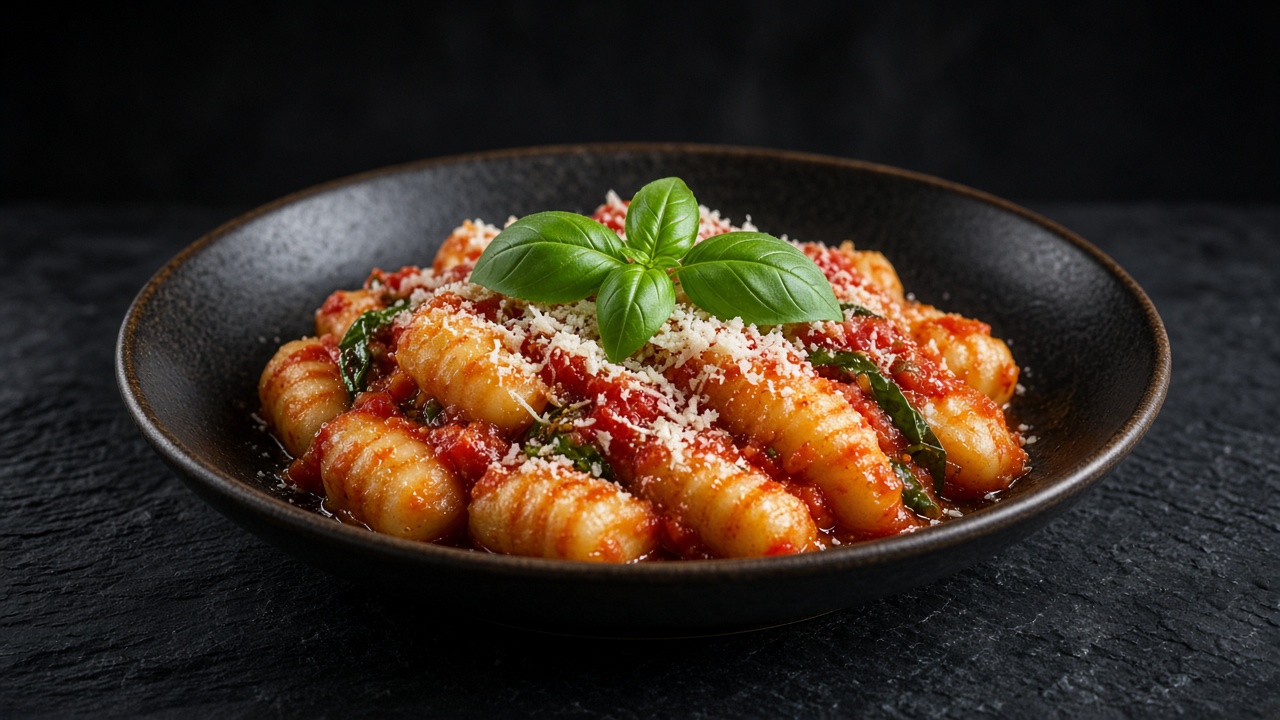
Potato Gnocchi with Butter-Tomato Sauce
Inspired by techniques from Serious Eats and NYT Cooking.
Light potato gnocchi, made from baked rather than boiled potatoes to keep them tender, served in a gentle butter-tomato sauce.
Always check the labels of the products you use.
Method
- 1
Make the sauce first. Put the tomatoes, butter, onion half and salt into a saucepan and simmer uncovered over low heat for 40 minutes, crushing the tomatoes as you go. It's ready when thick and glossy; discard the onion and keep the sauce warm. The butter here softens the sauce's acidity so it stays gentle enough for delicate gnocchi.
- 2
Bake the potatoes. Preheat the oven to 220°C (200°C fan) at least 20 minutes ahead, prick the potatoes all over and bake them directly on the oven rack for 50-60 minutes, until a knife slides in with no resistance. Baking rather than boiling keeps the potato flesh drier, which means less flour is needed later — the real secret to light gnocchi.
- 3
Rice the potatoes. While still hot, halve the potatoes and scoop out the flesh, pressing it through a ricer onto the worktop in a thin, even layer. Let it stand for 5 minutes to steam off a little moisture, but work with it while it's still warm rather than letting it go fully cold.
- 4
Bring the dough together. Sprinkle the salt and egg yolk over the riced potato, then sieve over two-thirds of the flour and cut it in with a bench scraper. Gather and fold-press the mixture 4-5 times, adding the remaining flour only until it just holds together and feels barely tacky; avoid kneading or smearing it, since overworking develops gluten and makes the gnocchi rubbery rather than light.
- 5
Test the dough. Boil a single small piece of the dough to check it; if it falls apart in the water, fold in another 1-2 tbsp of flour before shaping the rest. This quick test saves you from shaping a whole batch that won't hold together.
- 6
Shape the gnocchi. Cut the dough into 6 pieces and roll each into a 2cm rope with light hands, then cut into 2cm lengths. Roll each piece down the length of a fork or a gnocchi board to leave ridges, which help the sauce cling once cooked, then lay them on floured trays without letting them touch.
- 7
Cook until they float. Heat 4 litres of water with the 40g of salt to a rolling boil and boil the gnocchi in 2 batches. They're done when they float to the surface, after about 2 minutes, then give them 30 seconds more before lifting them straight into the sauce with a slotted spoon, keeping back a mug of the cooking water.
- 8
Finish gently in the sauce. Tip the sauce into a frying pan over low heat, add the gnocchi and 2-3 tbsp of the cooking water, then shake the pan gently for 30-60 seconds to coat everything. Shake rather than stir hard, since the gnocchi are tender and can break apart easily. Serve with the basil and Parmesan.
Storage
Shaped, uncooked gnocchi freeze well on a floured tray for up to 2 months and can be cooked straight from frozen with an extra minute. Cooked gnocchi keep in the fridge for up to 2 days; reheat gently in a pan with the sauce until piping hot. Cool leftovers in a shallow container and refrigerate within 2 hours (within 1 hour on a day above 32°C).
Equipment
- baking tray
- potato ricer or food mill
- bench scraper
- fine sieve
- 2 baking trays dusted with flour or semolina
- large pot (at least 5 litres)
- slotted spoon or spider strainer
- large frying pan (28 cm)
- medium saucepan
Nutrition per serving (estimated values)
| Per serving | Amount |
|---|---|
| Energy | 449 kcal |
| Protein | 12.5 g |
| Carbohydrate | 69.5 g |
| of which sugars | 4.3 g |
| of which free sugars | 0 g |
| Fat | 14 g |
| of which saturates | 8.2 g |
| Fibre | 7.3 g |
| Salt | 2.03 g |
Protein per 100 kcal
2.8 g High Protein needs ≥ 10 g
Calculated from USDA FoodData Central ingredient values