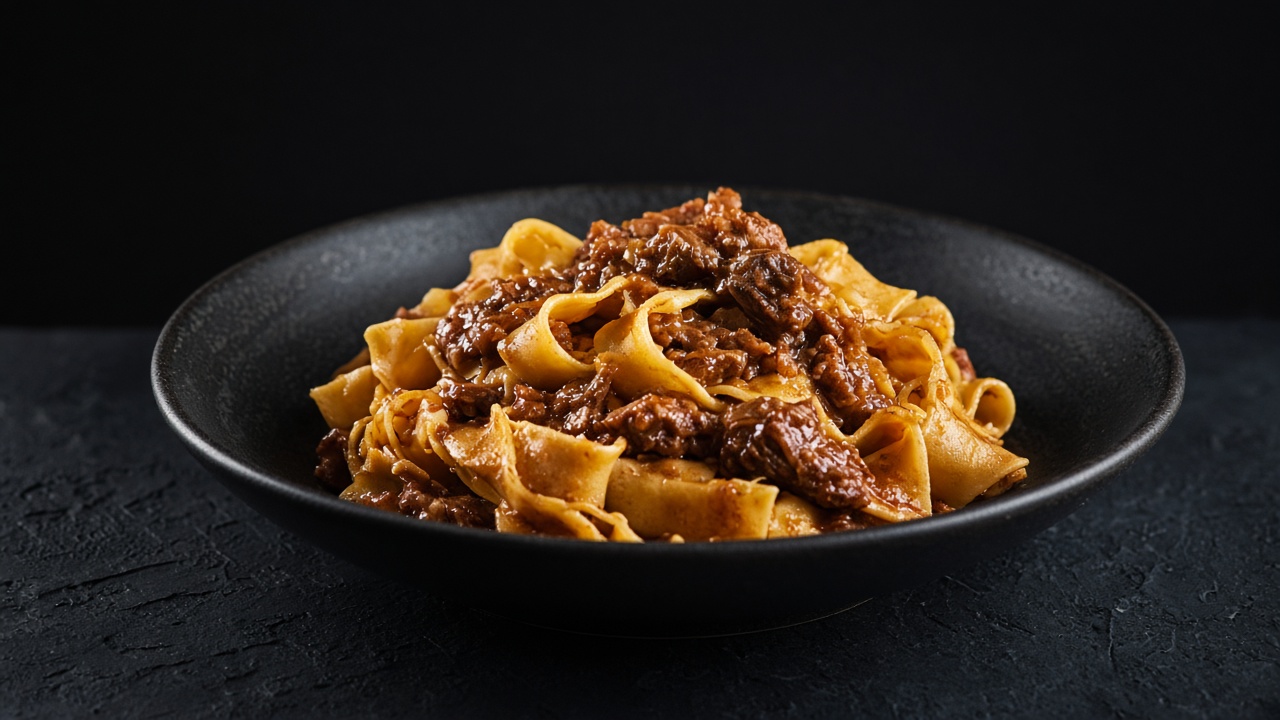
Pappardelle with Slow-Braised Beef Ragù
Inspired by techniques from NYT Cooking and America's Test Kitchen.
Wide fresh egg pappardelle tossed in butter and Parmesan, topped with a deeply savoury beef ragù braised low and slow until it falls apart.
Always check the labels of the products you use.
Method
- 1
Season the beef. Pat the beef chunks dry and season all over with the salt and pepper. Preheat the oven to 160°C (140°C fan) at least 20 minutes ahead, so it's fully up to temperature before the casserole goes in.
- 2
Brown the beef. Heat the olive oil in a large ovenproof casserole over medium-high heat and brown the beef in two batches, 4-5 minutes per batch, until deeply coloured on two or three sides. Browning in batches matters here - crowding the pan would trap steam and stop the meat catching colour, and it's that colour that gives the ragù its roasted depth. Set the browned beef aside on a plate.
- 3
Build the vegetable base. Lower the heat to medium and add the onion, carrot and celery to the same pot, scraping up the browned bits stuck to the bottom as they soften over 6-8 minutes. Stir in the garlic, tomato purée, rosemary and sage and cook for 2 minutes more, just until fragrant.
- 4
Braise the ragù. Add the crushed tomatoes and water, then return the beef and its juices to the pot and bring everything to a gentle simmer. Cover and transfer to the oven to braise for 3-3½ hours, stirring once or twice, until the beef falls apart easily when pressed with a spoon. Long, gentle heat is what melts the connective tissue in chuck into gelatine, and that's what gives the sauce its silky body.
- 5
Shred and reduce. Lift out and discard the herb sprigs, then shred the beef right in the pot using two forks. If the sauce looks thin, simmer it uncovered on the hob for 10-15 minutes until it thickens enough to coat the back of a spoon. Taste and adjust the salt before setting it aside.
- 6
Cook the pappardelle. Bring 4 litres of water to the boil with the 32 g salt and cook the pappardelle for 2-3 minutes, as fresh egg pasta cooks much faster than dried. Reserve 240 ml of the cooking water before draining.
- 7
Toss the pasta. Lift the pappardelle into a warm pan with the butter, half the Parmesan and 80 ml of the reserved water. Toss until the strands look glossy and lightly coated - the starchy water and melting butter form a light emulsion that clings to the pasta rather than pooling underneath it.
- 8
Serve. Divide the buttered pappardelle between warm plates, spoon the ragù generously over the top, and finish with the remaining Parmesan and the orange zest if using. Serve at once while everything is hot.
Storage
The ragù keeps in the fridge for up to 3 days, or can be frozen for up to 3 months; thaw overnight in the fridge and reheat gently until piping hot (74°C) throughout before serving. Fresh pappardelle is best cooked and eaten the same day rather than stored dressed, as it softens quickly once sauced. Cool leftovers in a shallow container and refrigerate within 2 hours (within 1 hour on a day above 32°C).
Equipment
- large ovenproof casserole with lid (at least 4 litres)
- tongs
- 2 forks
- large pot (at least 5 litres)
- colander or tongs
- heatproof mug for pasta water
Nutrition per serving (estimated values)
| Per serving | Amount |
|---|---|
| Energy | 630 kcal |
| Protein | 40.3 g |
| Carbohydrate | 53.3 g |
| of which sugars | 3.8 g |
| of which free sugars | 0 g |
| Fat | 28.7 g |
| of which saturates | 11.8 g |
| Fibre | 2.5 g |
| Salt | 2.18 g |
Protein per 100 kcal
6.4 g High Protein needs ≥ 10 g
Calculated from USDA FoodData Central ingredient values