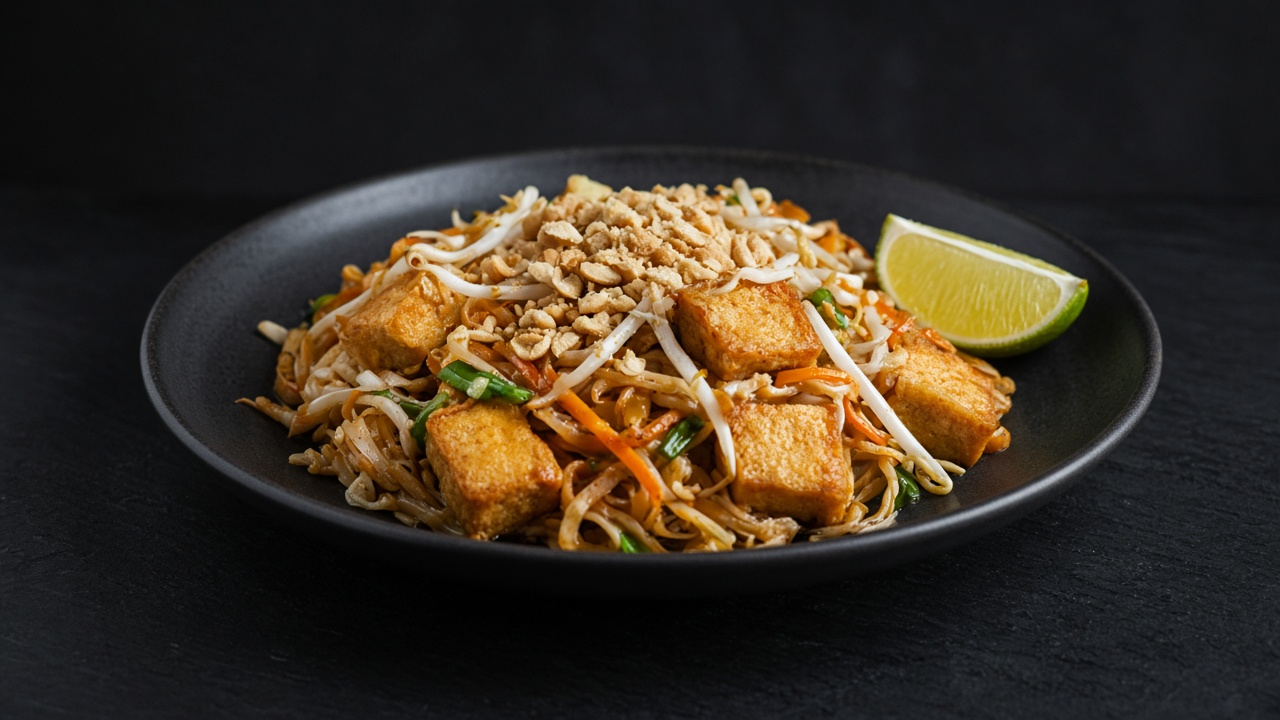
Tofu Pad Thai
Inspired by techniques from NYT Cooking and America's Test Kitchen.
This vegetarian pad thai follows the classic prawn and tofu method, but leaves out the prawns and fish sauce, uses soy sauce in the tamarind sauce, and fries a larger batch of pressed tofu until crisp.
Always check the labels of the products you use.
Method
Unlock all flavours with Premium
This flavour is part of Premium. You can see the ingredients and nutrition; the quantities and the full method are for members.
Premium: $4.99/month or $39.99/year.
Equipment
- large heatproof bowl
- fine sieve
- small saucepan
- clean tea towel
- wok (35 cm) or large non-stick frying pan (30 cm)
- wok spatula or tongs
- small bowls for the prepared ingredients
Nutrition per serving (estimated values)
| Per serving | Amount |
|---|---|
| Energy | 702 kcal |
| Protein | 31.7 g |
| Carbohydrate | 77.9 g |
| of which sugars | 16.7 g |
| of which free sugars | 9.8 g |
| Fat | 31.6 g |
| of which saturates | 4.5 g |
| Fibre | 6.5 g |
| Salt | 1.77 g |
Protein per 100 kcal
4.5 g High Protein needs ≥ 10 g
Calculated from USDA FoodData Central ingredient values
Metric · 4 servings
Noodles
- 250 g dried flat rice noodles (3-5 mm wide)
Sauce
- 40 g tamarind pulp (from a block)
- 120 ml boiling water
- 40 g palm sugar, chopped, or light brown sugar
- 2½ tbsp light soy sauce
Stir-fry
- 4 tbsp neutral oil (rapeseed, sunflower or vegetable)
- 400 g extra-firm tofu, patted dry, in 1.5 cm cubes
- 3 garlic cloves, finely chopped
- 2 shallots, finely chopped
- 3 large eggs, beaten
To finish
- 150 g bean sprouts
- 60 g garlic chives or spring onion greens, cut into 3 cm lengths
To serve
- 50 g roasted unsalted peanuts, chopped
- 1 lime, cut into wedges
- ½ tsp chilli flakes, to serve
- 1
Press the tofu. This vegetarian version follows the same soak, sauce and stir-fry method as the classic prawn and tofu pad thai, swapping soy sauce for fish sauce and using a bigger batch of tofu in place of prawns. Wrap the tofu in a folded tea towel, set a weight on top and leave it for 15 minutes before cooking. Pressing out the moisture means the tofu browns properly and holds its shape in the wok rather than steaming and falling apart.
- 2
Soak the noodles. Cover the rice noodles with hot tap water and leave to soak for 20-30 minutes, separating the strands with your fingers now and then. They're ready once they're white and bendy but still firm at the centre, since they finish cooking later in the sauce. Soaking rather than boiling keeps them from turning mushy once they hit the hot wok.
- 3
Make the tamarind sauce. Soak the tamarind pulp in the boiling water for 10 minutes, then mash it and push it through a sieve, scraping the underside to catch all the pulp, and discard the seeds and fibres. Stir in the palm sugar and soy sauce and warm for 1-2 minutes until the sugar has fully dissolved. Taste for the sour-salty-sweet balance that makes the sauce work.
- 4
Line everything up. Set the pressed tofu, garlic, shallot, egg, noodles and sauce out in the order you'll need them, with a mug of hot water nearby. The cooking itself moves quickly, so there's no time to start chopping once the wok is hot. Use two batches if your pan is smaller than 35cm, since overcrowding steams the noodles instead of frying them.
- 5
Fry the tofu. Heat 2 tbsp of oil in the wok over high and fry the tofu in two batches for 4-5 minutes each, until golden and crisp at the edges. Lift each batch out once it's coloured and firm. Frying in batches rather than all at once stops the tofu steaming in its own moisture and keeps the crisp edges you just built.
- 6
Toss noodles in sauce. Add 1 tbsp of oil to the wok with the garlic and shallot and stir for 20-30 seconds until fragrant. Tip in the noodles and sauce and toss for 2-3 minutes, adding hot water a tablespoon at a time if things look dry, until the noodles are tender and have taken on an even golden colour from the soy sauce, the sign that they've absorbed the sauce rather than sitting in a pool of it.
- 7
Scramble in the egg. Push the noodles to one side, pour in the last of the oil and add the eggs. Leave them for about 20 seconds to set at the base, then scramble and fold through the noodles. Letting the egg firm up slightly before mixing keeps it in soft curds rather than vanishing into wet strands.
- 8
Return tofu and sprouts. Return the crisp tofu to the wok with the bean sprouts and garlic chives, and toss for about 30 seconds. The sprouts should still have some crunch left when it's time to serve.
- 9
Serve with peanuts and lime. Divide between plates and finish with the chopped peanuts, lime wedges and chilli flakes alongside. The lime's sharpness cuts through the rich tofu and sauce, and the peanuts add crunch to every mouthful. Serve straight away before the noodles start to firm up.
Storage
Store in a covered container in the fridge for up to 2 days. Reheat in a hot wok or microwave until piping hot throughout, loosening with a splash of water if needed. Freezing isn't recommended, as the noodles and bean sprouts lose their texture once thawed. Cool leftovers in a shallow container and refrigerate within 2 hours (within 1 hour on a day above 32°C).