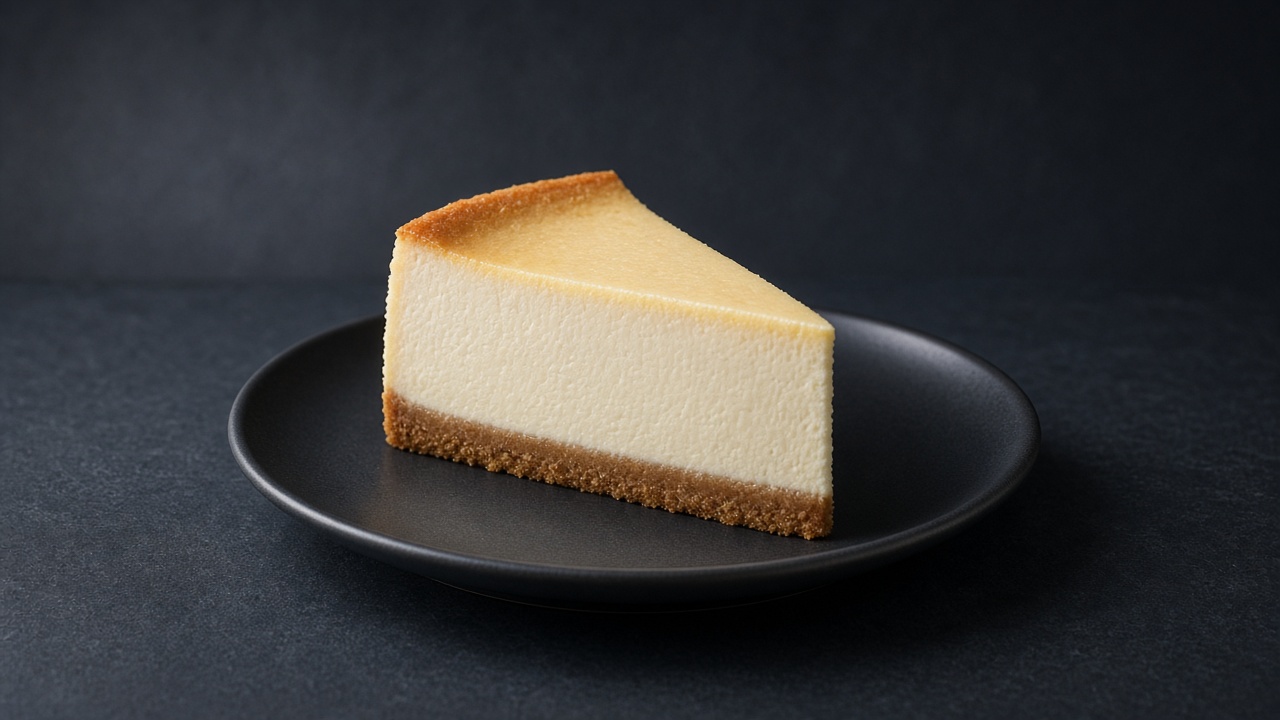
New York Cheesecake
Inspired by techniques from NYT Cooking and Serious Eats.
A classic dense, creamy baked cheesecake on a buttery biscuit base, baked gently in a water bath for a smooth, crack-free top.
Always check the labels of the products you use.
Method
- 1
Heat the Oven. Turn the oven to 160°C (140°C fan) at least 20 minutes before baking, with a shelf set in the lower-middle position. A fully heated oven lets the cheesecake start cooking evenly rather than creeping up to temperature, which matters for a filling this delicate.
- 2
Press and Bake the Base. Mix the crushed digestive biscuits, melted butter and caster sugar until the crumbs hold together when squeezed in your hand, then press the mixture firmly and evenly into the base of the tin. Bake for 10 minutes until set and fragrant, then leave to cool. A firm, pre-baked base stops the finished slice turning soggy underneath.
- 3
Wrap the Tin. Wrap the outside of the springform tin in two layers of heavy-duty foil, covering the base and sides completely. This keeps the water bath from seeping in through the seam once the tin is standing in hot water.
- 4
Beat the Cream Cheese Smooth. With everything at room temperature, beat the cream cheese, sugar, salt, flour and lemon zest on low speed for 2-3 minutes, scraping down the bowl and paddle twice. Keep going until it's completely smooth with no flecks of cream cheese left, since any lumps now will show up as streaks once baked.
- 5
Add Eggs and Soured Cream. Mix in the vanilla, then add the eggs and egg yolk one at a time on low speed, mixing only until each one disappears into the batter. Stir in the soured cream by hand. Keeping the speed low throughout stops air being whipped into the batter, since a puffed-up cheesecake is far more likely to sink and crack as it cools.
- 6
Fill and Set the Water Bath. Pour the filling over the cooled base and tap the tin on the worktop a few times to bring any air bubbles to the surface. Stand the tin in the roasting tin and pour in just-boiled water to a depth of 2.5cm up the sides. The surrounding water insulates the filling so it bakes gently instead of catching at the edges.
- 7
Bake Low and Slow. Bake for 70-85 minutes, until the edges look set and slightly puffed while the centre still wobbles like set jelly when nudged; an instant-read thermometer should read around 65°C in the middle. This slow, gentle heat is exactly what keeps a New York cheesecake dense and creamy rather than dry or cracked.
- 8
Rest, Then Chill. Turn off the oven, prop the door open and leave the cheesecake inside for 1 hour to cool down gradually. Run a thin knife around the edge so it can shrink slightly without tearing, then cool to room temperature and chill uncovered for at least 8 hours before unclipping and slicing.
Storage
Keep covered in the fridge for up to 4 days. It also freezes well, whole or in slices and tightly wrapped, for up to 2 months; thaw overnight in the fridge before serving chilled.
Equipment
- 23 cm springform tin (at least 7 cm deep)
- roasting tin large enough to hold the springform
- heavy-duty foil
- stand mixer or electric hand whisk
- kettle
- instant-read thermometer
- thin knife
Nutrition per serving (estimated values)
| Per serving | Amount |
|---|---|
| Energy | 526 kcal |
| Protein | 8.6 g |
| Carbohydrate | 39.8 g |
| of which sugars | 28.4 g |
| of which free sugars | 25 g |
| Fat | 37.7 g |
| of which saturates | 21 g |
| Fibre | 0.6 g |
| Salt | 1.12 g |
Protein per 100 kcal
1.6 g High Protein needs ≥ 10 g
Calculated from USDA FoodData Central ingredient values