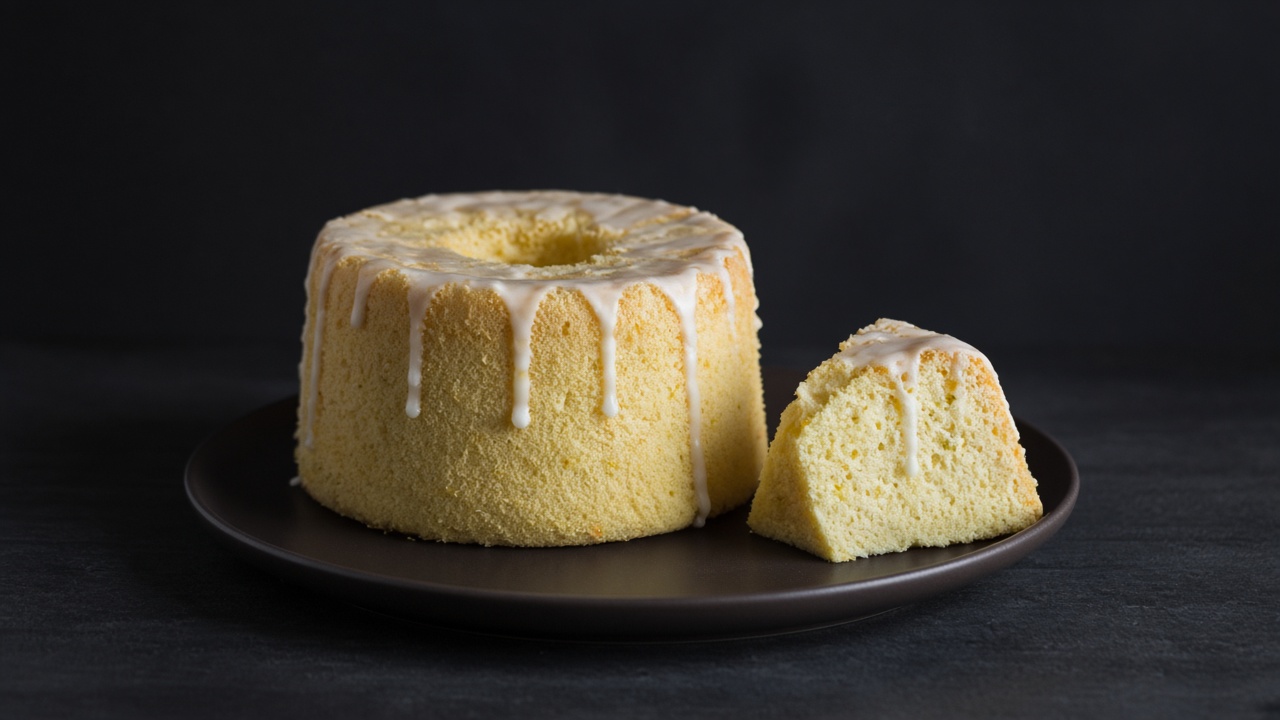
Lemon Chiffon Cake
Inspired by techniques from King Arthur Baking and Serious Eats.
This follows the classic chiffon method, with lemon juice replacing a third of the water and the zest of three lemons stirred into the batter, finished with a tangy lemon glaze instead of icing sugar.
Always check the labels of the products you use.
Method
Unlock all flavours with Premium
This flavour is part of Premium. You can see the ingredients and nutrition; the quantities and the full method are for members.
Premium: $4.99/month or $39.99/year.
Equipment
- 25 cm two-piece tube (angel food) tin, ungreased and unlined
- 2 large bowls
- stand mixer or electric hand whisk
- balloon whisk
- wire rack or glass bottle for cooling upside down
Nutrition per serving (estimated values)
| Per serving | Amount |
|---|---|
| Energy | 339 kcal |
| Protein | 5.4 g |
| Carbohydrate | 53.7 g |
| of which sugars | 36.9 g |
| of which free sugars | 36.6 g |
| Fat | 11.7 g |
| of which saturates | 1.5 g |
| Fibre | 0.4 g |
| Salt | 0.57 g |
Protein per 100 kcal
1.6 g High Protein needs ≥ 10 g
Calculated from USDA FoodData Central ingredient values
Metric · 12 servings
Cake
- 240 g cake flour (or plain flour; see note) plain flour works with a slightly firmer crumb
- 150 g caster sugar
- 2½ tsp baking powder
- 3 g fine sea salt or table salt about ½ tsp
- 6 large egg yolks
- 110 g neutral oil (sunflower or rapeseed)
- 2 tsp vanilla
Meringue
- 8 large egg whites, at room temperature
- ½ tsp cream of tartar
- 140 g caster sugar
Cake
- 120 ml water
- 60 ml lemon juice
- 3 unwaxed lemons, finely grated zest
Lemon glaze
- 150 g icing sugar
- 2 tbsp lemon juice
- 1
Heat the Oven. Get the oven to 165°C (145°C fan) at least 20 minutes ahead of baking, setting a shelf in the lower third.
- 2
Leave the Tin Ungreased. Keep the tube tin completely bare - no grease, no lining. As the chiffon rises it needs to grip the sides of the tin, and that grip is what carries it to its full height.
- 3
Make the Batter. In a large bowl, combine the flour with 150g of the sugar, the baking powder and the salt. Form a well in the middle and tip in the egg yolks, oil, water, lemon juice, lemon zest and vanilla, whisking everything together until it turns smooth and glossy, about 1 minute.
- 4
Whisk the Meringue. Beat the egg whites with the cream of tartar on medium speed until foamy, then gradually add the 140g of sugar on medium-high speed, continuing until the meringue reaches stiff, glossy peaks that hold straight up. This cake relies on a well-built meringue to hold its height as it bakes.
- 5
Fold Together. Lighten the batter by whisking in a third of the meringue, then use a spatula to fold in the remainder across two additions, scraping down to the bottom of the bowl each time, until no streaks of white remain.
- 6
Fill and Bake. Transfer the batter to the tin, draw a skewer through it to pop any large air bubbles, and level the top. Give it 50-60 minutes in the oven: it is done when tall and deep golden, the top springs back when pressed, the cracks look dry rather than wet, and a skewer comes out clean.
- 7
Cool Upside Down. The moment it leaves the oven, flip the tin upside down onto its feet, or rest it over the neck of a bottle, and let it cool completely, about 2 hours. Turning it over like this keeps the soft, delicate crumb from sinking under its own weight while it's still hot.
- 8
Unmould. Slide a thin knife around the tin's sides and around the central tube, lift away the base, and ease the cake free from the bottom.
- 9
Glaze the Cake. Stir the icing sugar into the lemon juice until it forms a thick glaze that's still pourable, then spoon it over the top of the cake, letting it run down the sides. Leave it for 20 minutes to set before cutting into slices.
Storage
Keep covered at room temperature for up to 3 days, or in the fridge for up to 5 days. It freezes well unglazed, wrapped tightly, for up to 2 months; thaw at room temperature before glazing and serving.