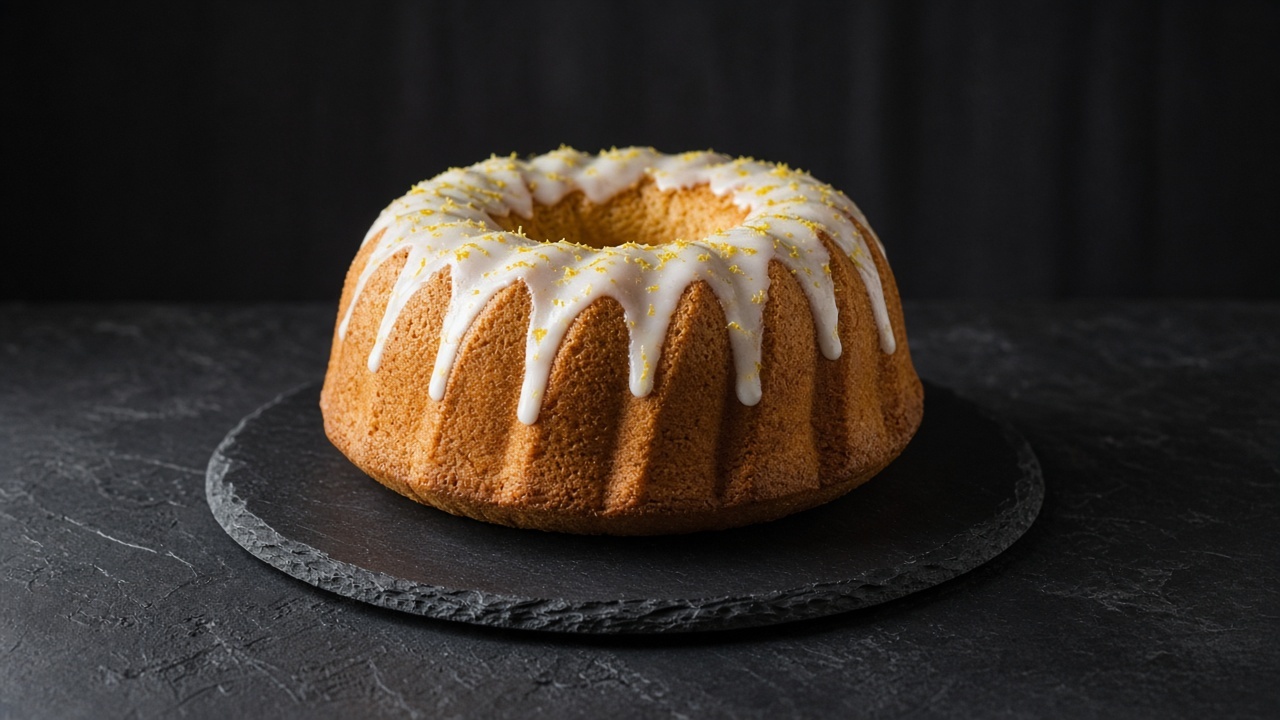
Lemon Bundt Cake with Lemon Glaze
Inspired by techniques from America's Test Kitchen and NYT Cooking.
This follows the classic vanilla Bundt method, but swaps the soured cream for buttermilk and loads the batter with lemon zest and juice, finishing with a sharp lemon glaze. A tender, fragrant ring cake that slices beautifully for a crowd.
Always check the labels of the products you use.
Method
Unlock all flavours with Premium
This flavour is part of Premium. You can see the ingredients and nutrition; the quantities and the full method are for members.
Premium: $4.99/month or $39.99/year.
Equipment
- 2.5-litre Bundt tin
- pastry brush
- fine grater
- stand mixer or electric hand whisk
- fine sieve
- wire rack
- skewer
Nutrition per serving (estimated values)
| Per serving | Amount |
|---|---|
| Energy | 422 kcal |
| Protein | 5.2 g |
| Carbohydrate | 64.9 g |
| of which sugars | 42.1 g |
| of which free sugars | 41.2 g |
| Fat | 16.3 g |
| of which saturates | 9.8 g |
| Fibre | 0.8 g |
| Salt | 0.59 g |
Protein per 100 kcal
1.2 g High Protein needs ≥ 10 g
Calculated from USDA FoodData Central ingredient values
Metric · 14 servings
Cake
- 3 unwaxed lemons, finely grated zest
- 3 tbsp lemon juice
- 400 g plain flour for the cake
- 1 tsp baking powder
- ½ tsp bicarbonate of soda
- 4.5 g fine sea salt or table salt, or table salt about ¾ tsp
- 1 tsp vanilla
- 200 g buttermilk, at room temperature
- 3 large eggs at room temperature
- 1 large egg yolk
- 250 g unsalted butter, softened (about 18°C), plus extra for the tin
- 380 g caster sugar
- 15 g plain flour, for the tin
Glaze
- 200 g icing sugar, sifted
- 2 tbsp lemon juice
- 1 tbsp buttermilk
- 1
Heat oven, prepare tin. Heat the oven to 175°C (155°C fan) for at least 20 minutes with a shelf in the lower-middle position. Brush every ridge of the Bundt tin with soft butter, dust with the 15 g flour and tap out the excess. A thorough coating in each groove is what lets the cake release cleanly, with all its sharp ridges intact.
- 2
Soak the zest. Mix the lemon zest with the 3 tbsp lemon juice and leave for 10-15 minutes. The juice softens the zest so it spreads evenly through the batter and releases more of its fragrant oils.
- 3
Ready the dry and wet. Whisk the flour, baking powder, bicarbonate of soda and salt together. Stir the zest mixture and vanilla into the buttermilk; it may thicken slightly, which is fine. Lightly beat the eggs with the extra yolk in a separate jug.
- 4
Cream butter and sugar. Beat the butter and caster sugar for 3-4 minutes until pale and fluffy, then add the eggs in 2 parts, scraping down the bowl each time. Creaming whips tiny air bubbles into the butter, which the raising agents then expand in the oven for a light, even crumb.
- 5
Alternate flour and buttermilk. With the mixer on low, add the flour mixture in 3 parts, alternating with the lemon buttermilk in 2, and mix just until smooth. Adding them in turns keeps the batter from splitting, and stopping as soon as it is smooth avoids developing gluten that would make the cake tough.
- 6
Fill and bake. Spoon the batter into the tin, level the top and tap the tin firmly on the worktop to knock out large air pockets. Bake for 45-55 minutes until golden, springy to the touch and a skewer pushed into the thickest part comes out clean.
- 7
Cool and turn out. Leave the cake in the tin for 10 minutes, then invert it onto the wire rack and cool for at least 2 hours. Those first minutes let the crumb firm up enough to hold together, while turning it out before it is cold stops steam from making it stick.
- 8
Glaze the cake. Whisk the icing sugar with the 2 tbsp lemon juice and the buttermilk until thick but pourable, adding extra lemon juice drop by drop if needed. Spoon it over the cold cake so it runs down the ridges, then leave for 25 minutes to set.
Storage
Keep in an airtight container at room temperature for up to 3 days. The unglazed cake can be wrapped well and frozen for up to 2 months; thaw at room temperature and glaze before serving.