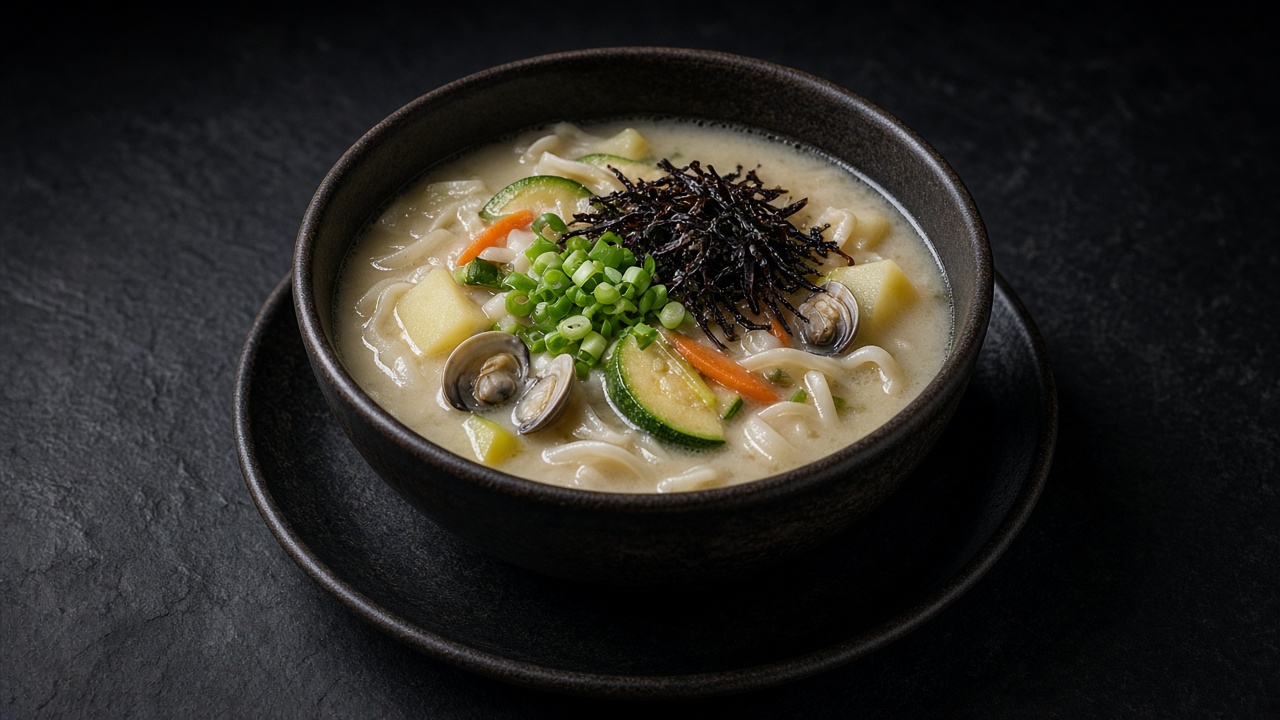
Kalguksu (Korean Knife-Cut Noodle Soup)
Inspired by techniques from Serious Eats and Food Network Kitchen.
A comforting Korean soup of hand-cut wheat noodles simmered in a savoury anchovy and kelp broth with courgette, potato and carrot.
Always check the labels of the products you use.
Method
- 1
Make the noodle dough. Mix the flour and salt, then work in the water and knead for 8-10 minutes until the dough is smooth and firm. A firm, well-developed dough is what lets the noodles hold their shape once cut and keep a pleasant chew in the soup.
- 2
Rest the dough. Cover the dough tightly and set it aside on the worktop for 30 minutes. Resting relaxes the gluten so it rolls out thin later without springing back or shrinking.
- 3
Simmer the stock. Put the dried anchovies, kelp and 2 litres of cold water in the pot, bring to a simmer and cook for 20 minutes, lifting the kelp out after the first 10 minutes. Removing the kelp early stops the broth turning slimy and bitter, while the anchovies carry on building savoury depth.
- 4
Strain the broth. Strain the broth through a fine sieve back into the pot, discarding the anchovies and kelp. This leaves a clear, clean-tasting base for the vegetables and noodles to cook in.
- 5
Roll and cut the noodles. Roll the rested dough out on a generously floured worktop to about 2mm thick, dust it well with more flour, fold it loosely into a 3-layer stack and cut into 4-5mm strips, then shake the strips loose. The flour dusting between layers stops the strands sticking together once they're cut.
- 6
Add potato and onion. Bring the strained broth back to a simmer and add the potato and onion, cooking for 3 minutes until they begin to soften. Potato needs a slightly longer head start than the other vegetables since it takes longest to cook through.
- 7
Simmer noodles and vegetables. Shake any excess flour from the noodles and add them to the pot along with the courgette, carrot and garlic. Simmer for 6-7 minutes, teasing the strands apart with chopsticks, until the noodles are tender and the broth turns lightly cloudy and silky, a result of starch from the noodles thickening it as they cook.
- 8
Season and serve. Stir in the soy sauce and black pepper, tasting before adding any extra salt since the broth should already be well seasoned. Ladle into bowls and top with sliced spring onions and crumbled laver, if using.
Storage
Kalguksu is best eaten freshly made, as the noodles keep absorbing broth and soften on standing. If you must store leftovers, keep broth and noodles together in the fridge for up to 1 day and reheat gently on the hob until piping hot (74°C), expecting a softer noodle texture; it doesn't freeze well. Cool leftovers in a shallow container and refrigerate within 2 hours (within 1 hour on a day above 32°C).
Equipment
- large bowl
- cling film
- rolling pin
- sharp knife
- large pot (at least 4 litres) with lid
- fine sieve
- chopsticks
Nutrition per serving (estimated values)
| Per serving | Amount |
|---|---|
| Energy | 434 kcal |
| Protein | 19.9 g |
| Carbohydrate | 79.2 g |
| of which sugars | 5 g |
| of which free sugars | 0 g |
| Fat | 4.2 g |
| of which saturates | 1 g |
| Fibre | 5.4 g |
| Salt | 2.66 g |
Protein per 100 kcal
4.6 g High Protein needs ≥ 10 g
Calculated from USDA FoodData Central ingredient values