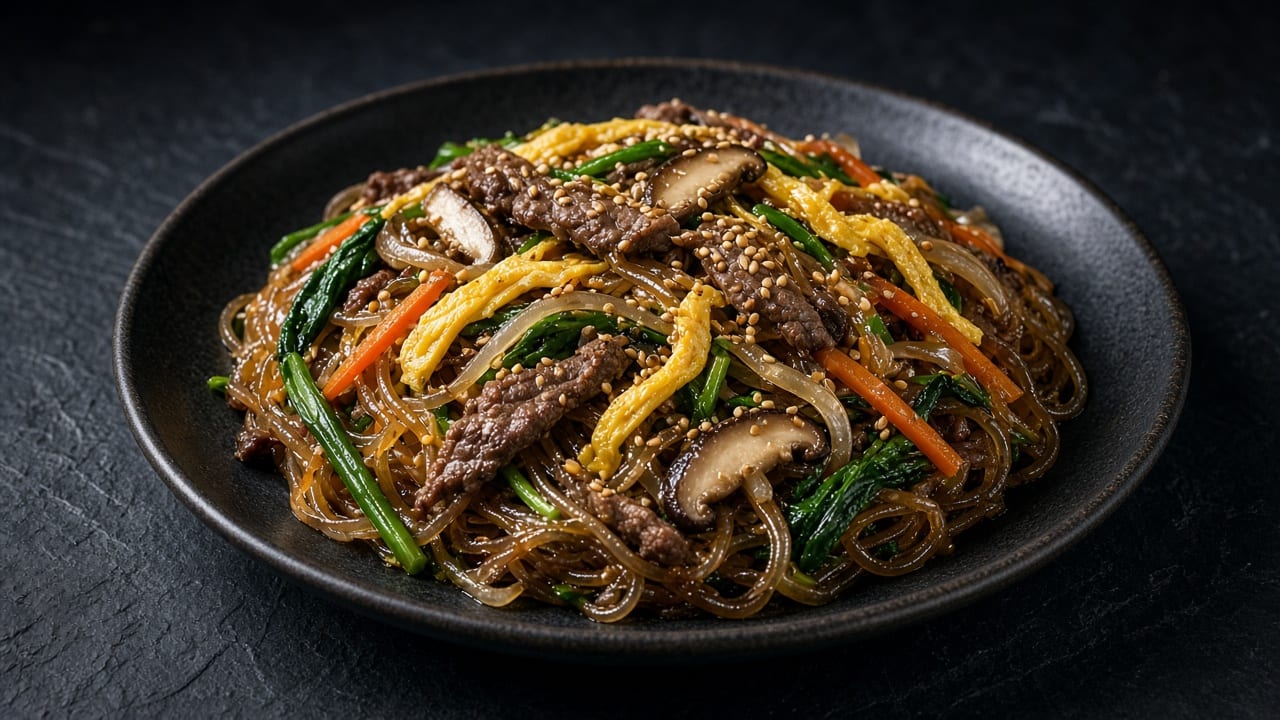
Japchae (Korean Glass Noodles with Beef and Vegetables)
Inspired by techniques from America's Test Kitchen, Serious Eats and NYT Cooking.
A colourful Korean noodle dish of chewy sweet potato glass noodles tossed with soy-marinated beef and a rainbow of separately cooked vegetables, finished with sesame.
Always check the labels of the products you use.
Method
- 1
Mix the sauce. Stir together the soy sauce, sugar, sesame oil, garlic and black pepper in a small bowl until the sugar dissolves. Making this ahead means every component of the dish can be seasoned from the same base, keeping the flavour consistent.
- 2
Marinate the beef. Toss the beef strips with the soy sauce, sugar, garlic and sesame oil, then leave to marinate for 15 minutes at room temperature. This short soak is enough for the thin strips to pick up seasoning without the sugar starting to toughen the surface.
- 3
Blanch and dress spinach. Bring 3 litres of water to the boil and blanch the spinach for just 10 seconds, then lift it out, rinse under cold water, squeeze dry and toss with 1 tsp of the sauce. The icy rinse stops the leaves cooking further and keeps them a fresh, deep green.
- 4
Cook and season noodles. In the same pot of water, cook the glass noodles for 6-8 minutes until they turn clear and are chewy but tender right through. Drain, rinse under cold water, drain well again, snip into roughly 20cm lengths with scissors, then toss in the large bowl with 2 tbsp of the sauce while still warm so they absorb it fully.
- 5
Stir-fry vegetables separately. Working one vegetable at a time over medium-high heat in a little oil with a pinch of salt, cook the onion, carrot, pepper, mushrooms and spring onions for 1-3 minutes each, just until tender but still bright, tipping each batch into the big bowl as it finishes. Cooking them individually, rather than all together, keeps every colour clean and stops the quicker-cooking vegetables turning soft before the others are ready.
- 6
Brown the beef. Stir-fry the marinated beef for 2-3 minutes over high heat until it's browned on the outside with no pink remaining inside, then add it to the bowl with the vegetables. High heat sears the surface quickly so the beef stays tender rather than stewing in its own juices.
- 7
Toss and finish. Add the dressed spinach and the remaining sauce to the bowl, then toss everything together thoroughly with your hands or tongs so the noodles, vegetables and beef are evenly coated. Scatter over the toasted sesame seeds and serve warm or at room temperature.
Storage
Keep japchae in an airtight container in the fridge for up to 2 days; it's traditionally enjoyed cold or at room temperature, but if reheating, warm gently in a pan or microwave until piping hot (74°C) throughout. It doesn't freeze well, as the glass noodles turn mushy once thawed. Cool leftovers in a shallow container and refrigerate within 2 hours (within 1 hour on a day above 32°C).
Equipment
- large pot (at least 4 litres)
- colander
- kitchen scissors
- large frying pan (28 cm)
- very large mixing bowl
Nutrition per serving (estimated values)
| Per serving | Amount |
|---|---|
| Energy | 445 kcal |
| Protein | 16 g |
| Carbohydrate | 62.7 g |
| of which sugars | 10.8 g |
| of which free sugars | 5.5 g |
| Fat | 15.1 g |
| of which saturates | 2.1 g |
| Fibre | 4.9 g |
| Salt | 2.37 g |
Protein per 100 kcal
3.6 g High Protein needs ≥ 10 g
Calculated from USDA FoodData Central ingredient values