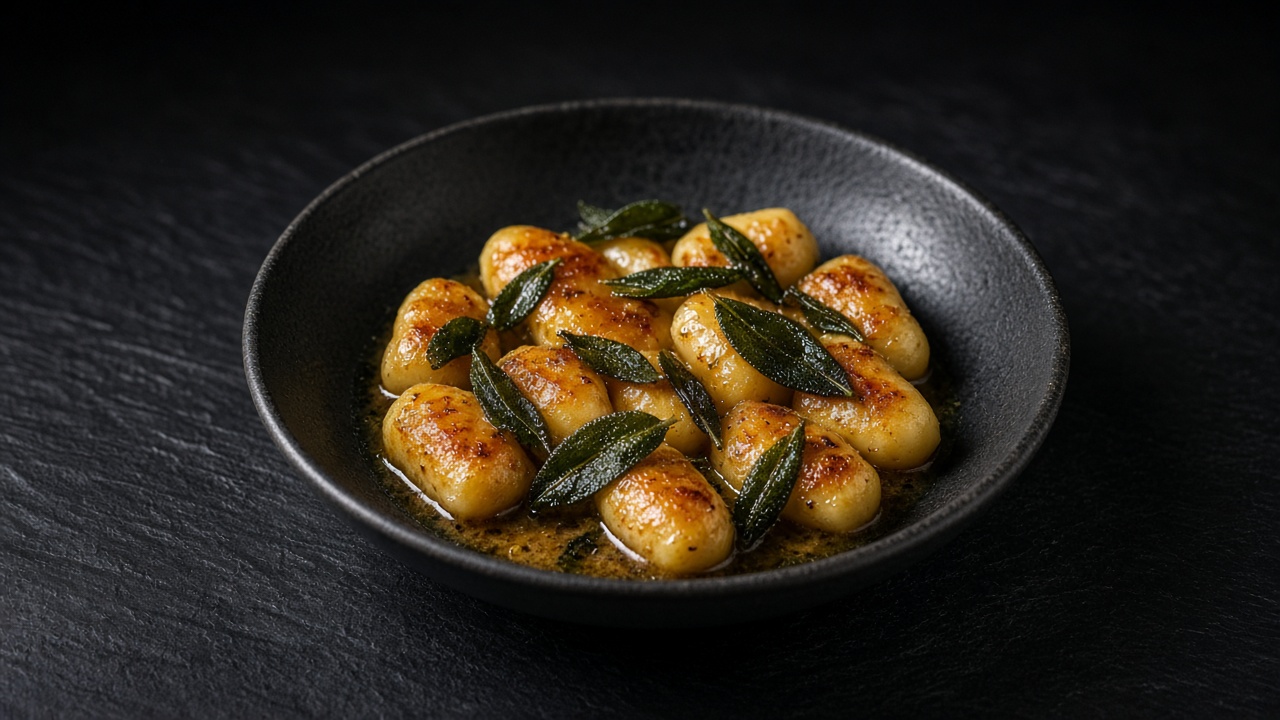
Potato Gnocchi with Brown Butter and Sage
Inspired by techniques from NYT Cooking and Serious Eats.
This follows the same potato gnocchi method as our classic recipe, with the butter-tomato sauce swapped for a simple brown butter and crisp sage glaze.
Always check the labels of the products you use.
Method
Unlock all flavours with Premium
This flavour is part of Premium. You can see the ingredients and nutrition; the quantities and the full method are for members.
Premium: $4.99/month or $39.99/year.
Equipment
- baking tray
- potato ricer or food mill
- bench scraper
- fine sieve
- 2 baking trays dusted with flour or semolina
- large pot (at least 5 litres)
- slotted spoon or spider strainer
- large frying pan (28 cm)
Nutrition per serving (estimated values)
| Per serving | Amount |
|---|---|
| Energy | 479 kcal |
| Protein | 11.8 g |
| Carbohydrate | 66.4 g |
| of which sugars | 1.9 g |
| of which free sugars | 0 g |
| Fat | 18.9 g |
| of which saturates | 11.4 g |
| Fibre | 5.7 g |
| Salt | 1.39 g |
Protein per 100 kcal
2.5 g High Protein needs ≥ 10 g
Calculated from USDA FoodData Central ingredient values
Metric · 4 servings
Gnocchi
- 1 kg floury potatoes (such as Maris Piper, King Edward or russet), scrubbed
- 1 large egg yolk
- 140 g plain flour, plus extra for dusting you may need 10-20 g less or more
- 3 g fine sea salt or table salt about ½ tsp
Brown butter
- 75 g unsalted butter
- 16 fresh sage leaves
- ¼ tsp ground black pepper
Pasta water
- 40 g fine salt for 4 litres of pasta water (1%) about 6¾ tsp; most of it goes down the drain
To serve
- 30 g Parmesan, finely grated
- 1
Bake the potatoes. Preheat the oven to 220°C (200°C fan) at least 20 minutes ahead, prick the potatoes all over and bake directly on the rack for 50-60 minutes, until a knife slides in with no resistance. Baking rather than boiling keeps the potato dry, which is what keeps the final dumplings light.
- 2
Rice the potatoes. While still hot, halve the potatoes and scoop the flesh through a ricer onto the worktop in a thin layer, then let it stand for 5 minutes to steam off a little moisture while it's still warm.
- 3
Bring the dough together. Sprinkle over the salt and egg yolk, sieve over two-thirds of the flour and cut it in with a bench scraper. Gather and fold-press the mixture 4-5 times, adding the remaining flour only until it just holds together and feels barely tacky, avoiding kneading or smearing, which would overwork the gluten and make the gnocchi rubbery.
- 4
Test the dough. Boil a single small piece to check it holds together; if it falls apart, fold in another 1-2 tbsp of flour before shaping the rest.
- 5
Shape the gnocchi. Cut the dough into 6 pieces, roll each into a 2cm rope with light hands, then cut into 2cm lengths. Roll each piece down a fork or gnocchi board to leave ridges that will hold the sauce, then lay them on floured trays without touching.
- 6
Brown the butter. Just before cooking the gnocchi, melt the butter in a frying pan over medium heat and swirl for 3-4 minutes, until the milk solids turn hazelnut-brown and the butter smells distinctly nutty. Add the sage leaves and fry for 30 seconds until crisp, then lower the heat so the butter doesn't carry on darkening.
- 7
Cook until they float. Bring 4 litres of water to a rolling boil with the 40g of salt and cook the gnocchi in 2 batches. They're ready when they float, after about 2 minutes, then give them 30 seconds more before lifting them straight into the brown butter with a slotted spoon, keeping a mug of the cooking water.
- 8
Glaze and finish. Add the gnocchi to the brown butter with 2 tbsp of the cooking water and shake the pan over medium heat for 1 minute, so they pick up a light colour at the edges. The added water stops the butter from burning while it forms a light, glossy emulsion around the gnocchi. Season with pepper and serve with Parmesan.
Storage
Shaped, uncooked gnocchi freeze well on a floured tray for up to 2 months and cook straight from frozen with an extra minute. Cooked gnocchi keep in the fridge for up to 2 days; reheat gently in a pan until piping hot. Cool leftovers in a shallow container and refrigerate within 2 hours (within 1 hour on a day above 32°C).