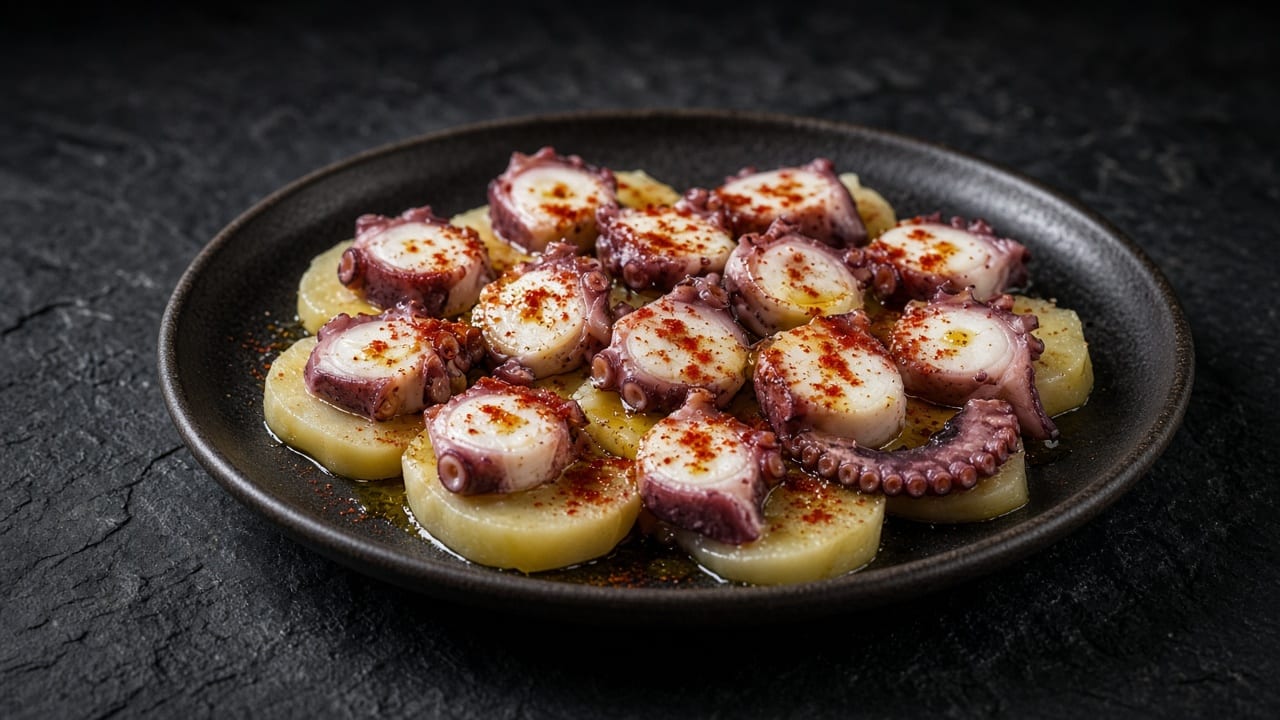
Galician-Style Octopus with Potatoes, Smoked Paprika and Olive Oil
Inspired by techniques from NYT Cooking and Serious Eats.
Tender poached octopus piled over seasoned potatoes and finished with good olive oil and smoked paprika — a simple, generous Galician classic that tastes far more impressive than its short ingredient list suggests.
Always check the labels of the products you use.
Method
- 1
Thaw and Clean. If your octopus arrived frozen, let it thaw slowly in its bag in the fridge for 24 hours before you start. Freezing and thawing breaks down the tough muscle fibres in the tentacles, which is why frozen-and-thawed octopus is often more tender than fresh. Rinse it well inside and out, and if needed, cut out the hard beak at the centre of the tentacles and trim away the eyes.
- 2
Build the Poaching Water. Pour about 6 litres of water into your largest pot and add the bay leaves and the halved onion, but no salt. Bring it to a rolling boil over high heat; octopus releases plenty of its own salty juices as it cooks, so seasoning the water now would make the finished dish too salty.
- 3
Dip to Curl the Legs. Holding the octopus by the head with tongs, dunk it into the boiling water for about 3 seconds, lift it clear, and repeat twice more before lowering it in fully. This brief dipping shocks the outer skin, making the tentacles curl into neat spirals as they cook and helping keep the skin intact rather than splitting.
- 4
Simmer Low and Slow. Once the water returns to the boil, cover the pot, turn the heat down to a gentle simmer and leave the octopus to cook for 50-70 minutes. Keeping the water at a bare simmer rather than a hard boil is what turns the naturally chewy flesh meltingly tender without toughening it.
- 5
Check and Rest. Test for doneness by sliding a small knife or skewer into the thickest part of a tentacle where it meets the head; it should go in with very little resistance. Turn off the heat and let the octopus sit in its cooking water for 10 minutes before lifting it onto a board, which allows the fibres to relax further and keeps the flesh moist.
- 6
Cook the Potatoes. Discard the bay leaves and onion, bring the octopus water back to the boil, then add the whole peeled potatoes and simmer for 20-25 minutes until a knife slides through easily. Cooking them in the flavourful octopus water seasons the potatoes from the inside as they soften, so lift them out with a slotted spoon once tender.
- 7
Slice While Warm. While everything is still hot, snip the tentacles off with kitchen scissors and cut them into 1 cm slices, then cut the head into small pieces. Cutting the octopus while it's warm makes it far easier to slice neatly; slice the potatoes 1 cm thick too.
- 8
Dress and Serve. Spread the warm potato slices over a board or platter and pile the octopus on top. Drizzle generously with the olive oil, dust with the smoked paprika and scatter with the flaky salt, then serve straight away while warm, as the heat helps the oil and paprika cling and release their aroma.
Storage
Leftovers keep covered in the fridge for up to 2 days; reheat gently in a warm pan or in the microwave until piping hot all the way through (74°C), as octopus can turn rubbery if reheated too hard or for too long. It isn't suitable for freezing once dressed with oil, as the potatoes don't freeze well. Cool leftovers in a shallow container and refrigerate within 2 hours (within 1 hour on a day above 32°C).
Equipment
- very large pot (at least 8 litres) with lid
- tongs
- small sharp knife or skewer
- kitchen scissors
- large wooden board or warm platter
- slotted spoon
Nutrition per serving (estimated values)
| Per serving | Amount |
|---|---|
| Energy | 502 kcal |
| Protein | 45.3 g |
| Carbohydrate | 41.7 g |
| of which sugars | 1.8 g |
| of which free sugars | 0 g |
| Fat | 16.7 g |
| of which saturates | 2.6 g |
| Fibre | 4.6 g |
| Salt | 2.22 g |
Protein per 100 kcal
9 g High Protein needs ≥ 10 g
Calculated from USDA FoodData Central ingredient values