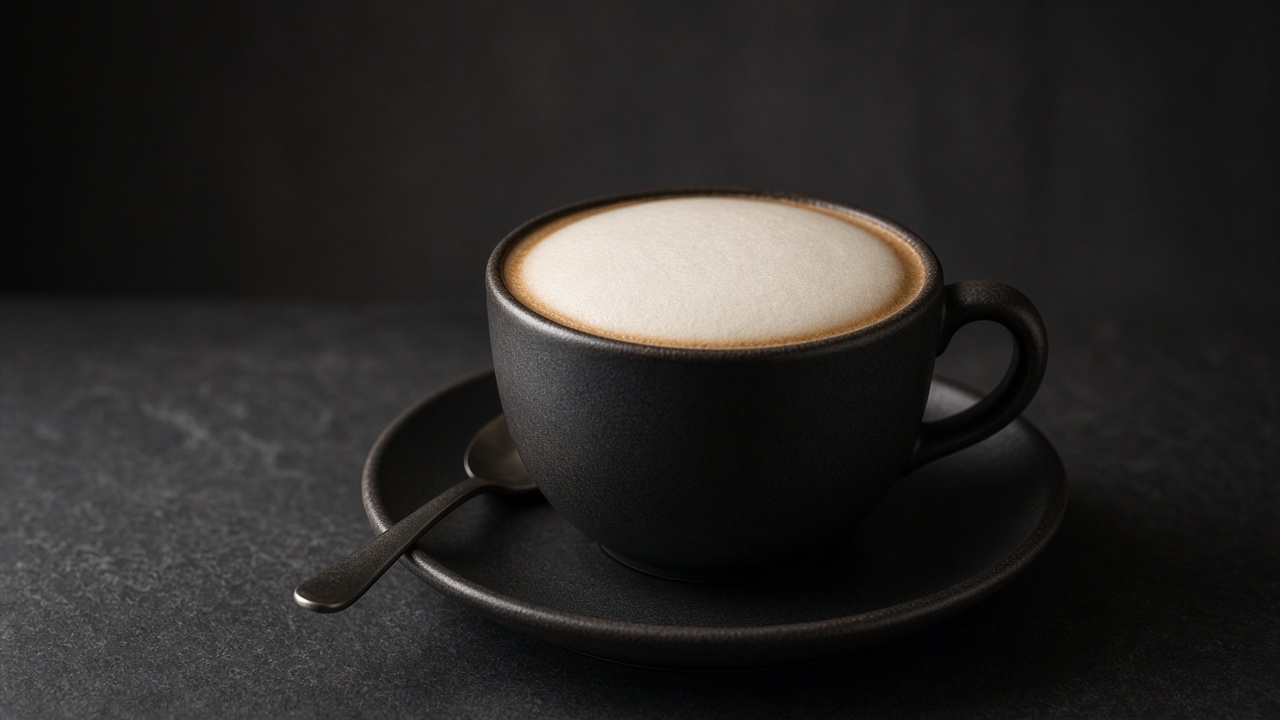
Classic Cappuccino with a Deep Foam Cap
A double espresso under well-aerated steamed milk, finished with a domed cap of thick white foam, roughly a third each of espresso, milk and foam.
Always check the labels of the products you use.
Method
- 1
Pull the shot. Pull a double espresso, 18 g in and about 40 ml out in 25-30 s, straight into the warm cup.
- 2
Aerate. Purge the wand, then hold its tip just under the surface of the cold milk and open the steam fully. Keep it high so the milk hisses and swells by about half, stopping once the jug no longer feels cold. Air goes in while the milk is cool, because cold proteins hold foam best.
- 3
Heat. Lower the tip slightly and let the milk spin until the jug is too hot to hold for more than a second, 60-65 °C. Hotter milk tastes flat and the foam collapses.
- 4
Polish. Tap the jug firmly on the counter and swirl to pop any large bubbles.
- 5
Pour and top. Pour the milk into the espresso, then spoon the thick foam over the top in a generous dome. Aim for roughly a third each of espresso, milk and foam.
Storage
Serve immediately; foam starts to separate within minutes. Cool leftovers in a shallow container and refrigerate within 2 hours (within 1 hour on a day above 32°C).
Equipment
- espresso machine with steam wand
- burr grinder
- digital scale
- tamper
- timer
- milk jug (350 ml)
- thermometer (optional)
- preheated cup (about 180 ml)
- spoon
Nutrition per serving (estimated values)
| Per serving | Amount |
|---|---|
| Energy | 79 kcal |
| Protein | 4 g |
| Carbohydrate | 6.6 g |
| of which sugars | 6.3 g |
| of which free sugars | 0 g |
| Fat | 4.1 g |
| of which saturates | 2.3 g |
| Fibre | 0 g |
| Salt | 0.15 g |
Protein per 100 kcal
5.1 g High Protein needs ≥ 10 g
Calculated from USDA FoodData Central ingredient values