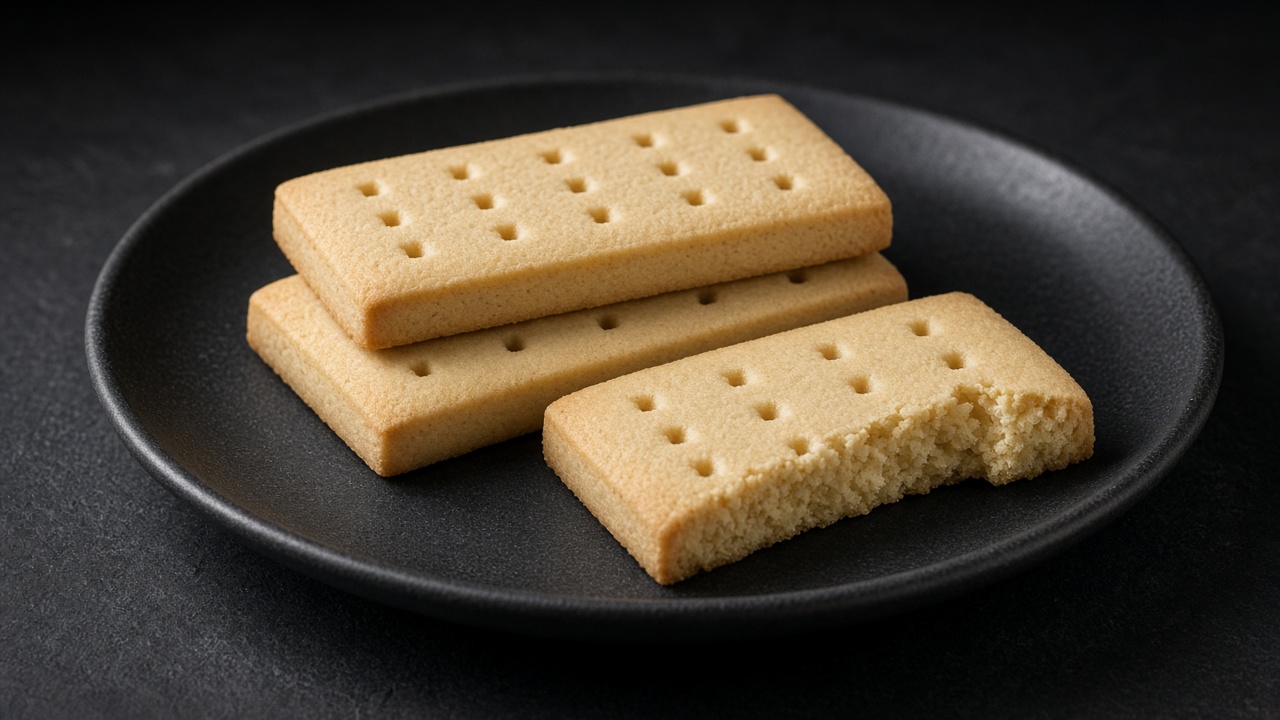
Classic Butter Shortbread
Inspired by techniques from King Arthur Baking and NYT Cooking.
A three-ingredient Scottish classic — butter, sugar and flour — baked slowly to a pale, crumbly finger with a buttery snap.
Always check the labels of the products you use.
Method
- 1
Heat the oven. Heat the oven to 160°C (140°C fan) for at least 20 minutes before baking, ideally while the dough chills so it's ready the moment you need it.
- 2
Cream butter and sugar. Beat the cool-soft butter, sugar and salt together for 2-3 minutes until pale and creamy; stop before it turns fluffy or white. Beating past this point whips in too much air, which makes the shortbread puff and lose its characteristic short, dense texture.
- 3
Add flour and cornflour. Sift in the flour and cornflour, then mix on low speed or with a spatula only until the dough clumps together. With no egg or leavening in the mix, minimal handling is what keeps the biscuit short — overworking it builds gluten and turns it tough.
- 4
Press into the tin. Press the dough evenly into the lined 20cm metal tin, smoothing the top flat, then prick all over with a fork. Docking lets steam escape as it bakes so the surface doesn't bubble or blister.
- 5
Chill the dough. Chill for 30 minutes until firm. A cold, firm base holds its shape better in the oven and bakes more evenly.
- 6
Bake. Bake for 35-40 minutes, until pale to just golden all over and slightly deeper at the edges — it should never turn properly brown. Long, gentle baking dries and crisps shortbread without much colour, so pull it before it browns.
- 7
Sprinkle and cut. Sprinkle with the caster sugar while still hot, then cool for 5-10 minutes before cutting into 16 fingers while still warm in the tin. Warm shortbread cuts cleanly, while a fully cooled slab is firm enough to crack under the knife.
- 8
Cool fully. Allow it to cool fully in the tin, then lift the fingers out.
Storage
Keep in an airtight tin at room temperature for 3-4 days. It freezes well for up to 2 months; thaw at room temperature before serving.
Equipment
- 20 cm square metal baking tin (not glass), lined with a baking-paper sling
- stand mixer or electric hand whisk
- fork
- sharp knife
Nutrition per serving (estimated values)
| Per serving | Amount |
|---|---|
| Energy | 207 kcal |
| Protein | 1.6 g |
| Carbohydrate | 24.5 g |
| of which sugars | 7.5 g |
| of which free sugars | 7.5 g |
| Fat | 11.5 g |
| of which saturates | 7.2 g |
| Fibre | 0.4 g |
| Salt | 0.19 g |
Protein per 100 kcal
0.8 g High Protein needs ≥ 10 g
Calculated from USDA FoodData Central ingredient values