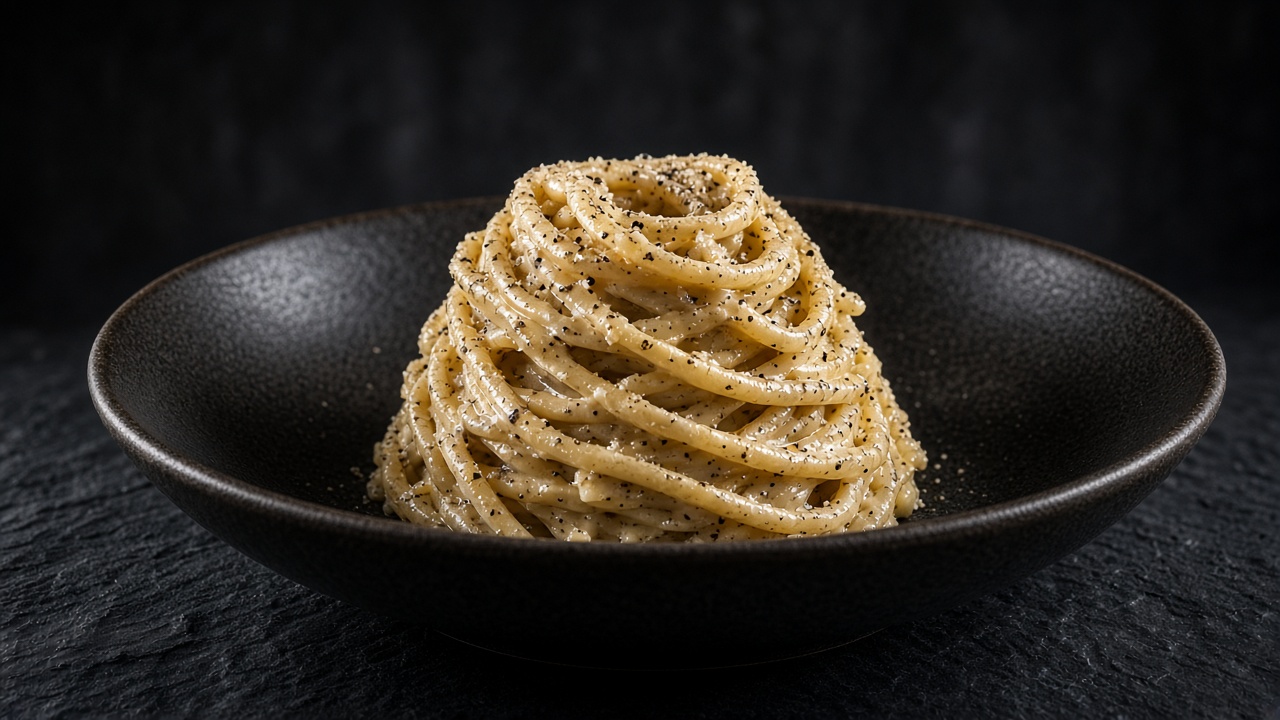
Cacio e Pepe (Pecorino and Black Pepper Spaghetti)
Inspired by techniques from Serious Eats and NYT Cooking.
A classic Roman spaghetti tossed in a silky sauce of pecorino and black pepper, built almost entirely from cheese, pepper and starchy pasta water.
Always check the labels of the products you use.
Method
- 1
Grate the Cheese Finely. Grate the pecorino as finely as possible using a rasp-style grater. Very fine shreds melt smoothly into the sauce before they have a chance to clump, whereas coarser grated cheese tends to seize into rubbery strings when it hits hot liquid.
- 2
Boil a Small Pot of Water. Bring the 2 litres of water and 10g salt to the boil in the wide pan. Using less water than usual concentrates the starch, and that extra starch is what helps bind the finished sauce together.
- 3
Toast the Pepper. Toast the crushed peppercorns in the dry small saucepan over medium-high heat for about 1 minute until fragrant. Dry toasting wakes up the pepper's aromatic oils, giving a sharper, toastier heat than raw pepper would.
- 4
Make a Pepper Gel. Stir the cornflour into the 45ml cold water, add it to the toasted pepper and stir for 30-60 seconds until it turns clear and thickens into a gel; take off the heat and cool for 1 minute. The cornflour sets into a stable starchy base that will later stop the cheese clumping when it meets hot water.
- 5
Beat Gel into Cheese. In the mixing bowl, beat the cooled pepper gel into the 120g pecorino until you have a stiff, smooth paste. The starch coats the cheese proteins, so when hot water is added later they loosen into a sauce instead of seizing into lumps.
- 6
Cook the Pasta. Cook the spaghetti in the boiling water for 1 minute less than the packet time, stirring well during the first minute so it doesn't stick. Slightly undercooking now leaves room for the pasta to finish softening once tossed with the sauce.
- 7
Loosen the Paste. Stir 60ml of the hot pasta water into the cheese paste to loosen it to a thick, pourable consistency. Warming the paste gently readies it to combine with the hot pasta without a sudden temperature shock that could split it.
- 8
Drain and Rest. Reserve 240ml of the pasta water, then drain the spaghetti and let it stand for 1 minute so it is hot but no longer scalding. Pasta that's too hot can cause the cheese proteins to tighten and seize as soon as they touch it.
- 9
Toss to a Silky Sauce. Add the pasta to the cheese paste with 60ml more pasta water, then toss hard with tongs, adding more water 60ml at a time, until a silky glaze coats every strand with no clumps or pooling liquid. Vigorous tossing beats the starch, fat and water into an emulsion, much like whisking together a good vinaigrette.
- 10
Serve Immediately. Serve straight away on warmed plates with the remaining pecorino and extra pepper. Cacio e pepe firms up quickly as it cools, so getting it to the table hot keeps the sauce at its silkiest.
Storage
Best eaten immediately, as the sauce does not reheat well and tends to split or stiffen; leftovers can be kept covered in the fridge for up to a day. To reheat, warm gently with a splash of water over the lowest heat, stirring constantly, until piping hot. Cool leftovers in a shallow container and refrigerate within 2 hours (within 1 hour on a day above 32°C).
Equipment
- wide pan or large sauté pan (30 cm) for the pasta
- small saucepan
- large mixing bowl
- fine grater (rasp)
- tongs
- heatproof mug
- warmed plates
Nutrition per serving (estimated values)
| Per serving | Amount |
|---|---|
| Energy | 462 kcal |
| Protein | 22.3 g |
| Carbohydrate | 68.3 g |
| of which sugars | 2.6 g |
| of which free sugars | 0 g |
| Fat | 10.5 g |
| of which saturates | 6 g |
| Fibre | 3.1 g |
| Salt | 2.02 g |
Protein per 100 kcal
4.8 g High Protein needs ≥ 10 g
Calculated from USDA FoodData Central ingredient values