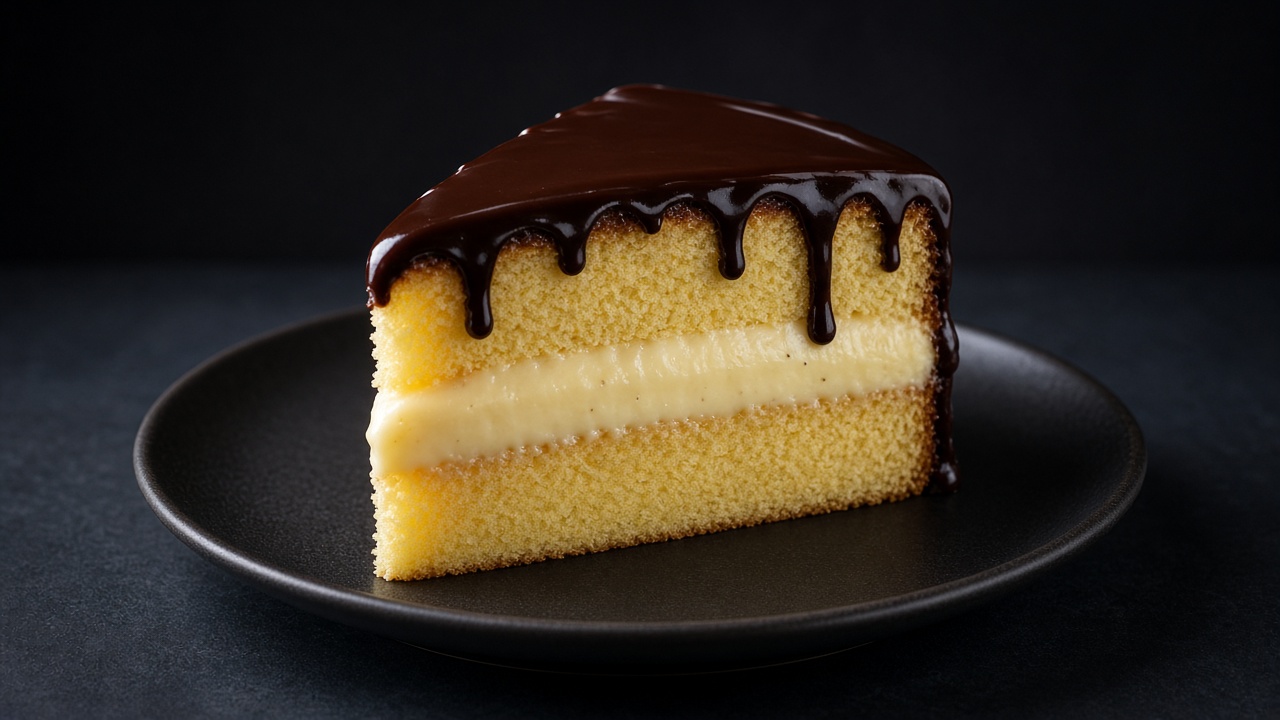
Boston Cream Pie
Inspired by techniques from NYT Cooking and King Arthur Baking.
Two layers of light vanilla sponge filled with silky pastry cream and finished with a poured chocolate glaze that drips down the sides.
Always check the labels of the products you use.
Method
- 1
Make the pastry cream. Heat the milk in a saucepan until steaming, then whisk the egg yolks, sugar, cornflour and salt together in a bowl until pale. Pour the hot milk into the yolk mixture in a thin stream, whisking constantly, so the eggs warm gradually rather than scrambling.
- 2
Cook the custard. Return the mixture to the pan and cook over medium heat, whisking constantly, until it thickens and starts to bubble; keep it bubbling for 1 minute more. That full minute of boiling cooks out the raw starch so the custard sets firm, and brings it safely above 74°C.
- 3
Chill the custard. Off the heat, whisk in the butter and vanilla, then push the custard through a sieve into a bowl to catch any lumps. Press cling film directly onto the surface and chill for at least 3 hours, until completely cold and firm. Chilling flat against the surface stops a skin forming while it sets.
- 4
Preheat the oven. Heat the oven to 175°C (155°C fan) with a shelf in the middle, allowing at least 20 minutes for it to reach temperature before the sponge goes in.
- 5
Whisk the egg mixture. Whisk the eggs, sugar and salt on high speed for 4-5 minutes, until thick, pale and roughly doubled in volume, then mix in the vanilla. This whipped-egg method is what gives the sponge its light, airy texture without extra butter.
- 6
Fold in the flour. Sift the flour and baking powder over the whisked eggs and fold in gently in two additions. Folding rather than stirring vigorously keeps the air you've just whipped in from collapsing.
- 7
Temper in the warm milk. Heat the milk and butter together until hot but not boiling, then stir a spoonful of the batter into it to loosen it. Fold this mixture back into the rest of the batter until just combined, which keeps the sponge from deflating.
- 8
Bake the sponges. Divide the batter between the two tins and bake for 20-25 minutes, until golden and springy to the touch. Cool in the tins for 10 minutes, then turn out onto a rack and leave to cool completely before filling.
- 9
Fill the cake. Whisk the cold pastry cream briefly to loosen it back to a smooth, spreadable texture. Set one sponge layer on a serving plate, spread the pastry cream to within 1cm of the edge, then top with the second layer and press down gently.
- 10
Make the glaze. Bring the double cream and golden syrup just to the boil, then pour over the chopped chocolate and leave undisturbed for 2 minutes. Stir until completely smooth and glossy; the resting time lets the chocolate melt gently rather than seizing from direct heat.
- 11
Glaze and chill. Let the glaze cool for 5-10 minutes until it thickens slightly, then pour it onto the centre of the cake and nudge it gently so it reaches the edge and drips down the sides. Chill for 30 minutes to set the glaze before slicing, and keep the cake refrigerated afterwards.
Storage
Store in the fridge, covered, for up to 3 days, as the custard filling needs to stay cold. It isn't suitable for freezing once filled, as the pastry cream can separate when thawed.
Equipment
- medium saucepan
- balloon whisk
- fine sieve
- cling film
- two 20 cm round cake tins, greased and base-lined
- stand mixer or electric hand whisk
- small saucepan
- wire rack
- serrated knife
Nutrition per serving (estimated values)
| Per serving | Amount |
|---|---|
| Energy | 474 kcal |
| Protein | 8.3 g |
| Carbohydrate | 60.1 g |
| of which sugars | 38.5 g |
| of which free sugars | 34.5 g |
| Fat | 22.2 g |
| of which saturates | 12.5 g |
| Fibre | 1.6 g |
| Salt | 0.67 g |
Protein per 100 kcal
1.8 g High Protein needs ≥ 10 g
Calculated from USDA FoodData Central ingredient values