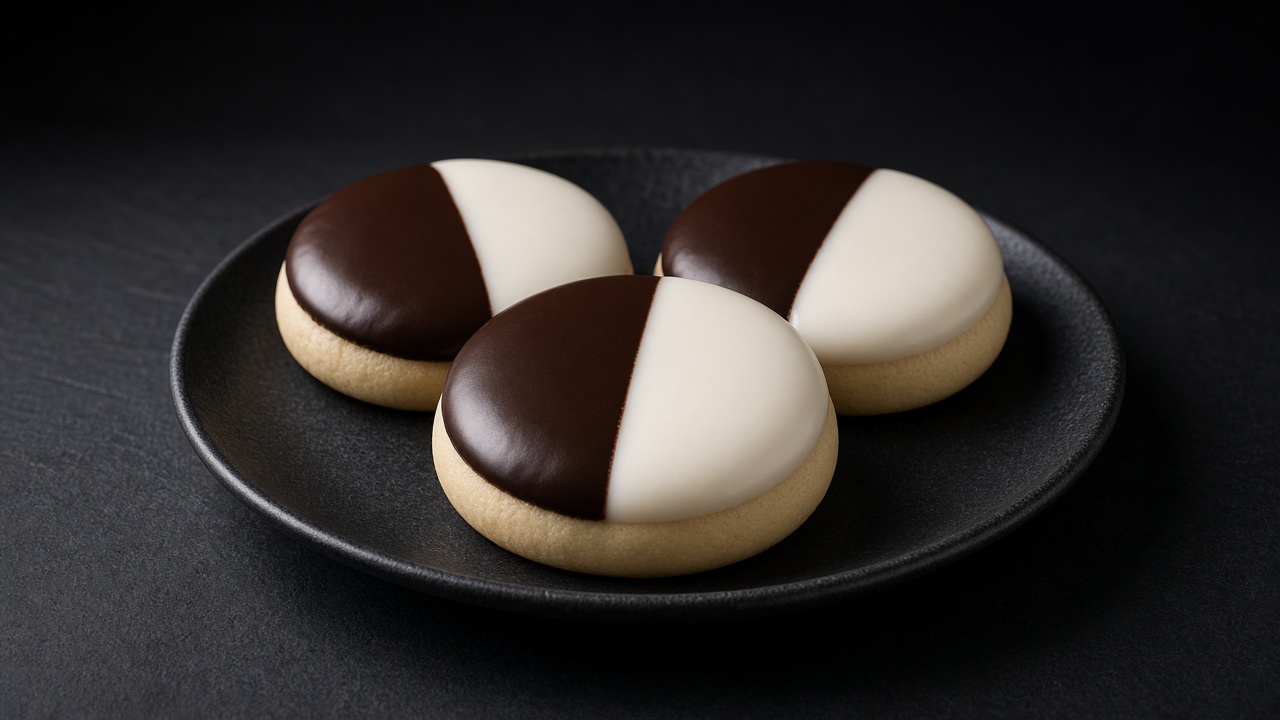
Black-and-White Cookies
Inspired by techniques from King Arthur Baking and NYT Cooking.
Large, soft cake-like cookies iced in a neat split of vanilla and chocolate icing, a classic New York bakery treat.
Always check the labels of the products you use.
Method
- 1
Heat the oven. Heat the oven to 190°C (170°C fan) for at least 20 minutes before baking. These cake-like cookies need a properly hot oven from the start to set their shape before spreading too far.
- 2
Cream butter and sugar. Beat the butter and caster sugar on medium speed for 3-4 minutes until light, then beat in the eggs one at a time, followed by the vanilla and lemon zest. Beating the butter and sugar well here builds the air that keeps these cookies soft and cake-like rather than dense.
- 3
Mix wet and dry separately. Whisk the flour, baking powder, bicarbonate of soda and salt together in one bowl, and mix the soured cream with the milk in another. Keeping them separate until needed means they combine evenly once added.
- 4
Combine in stages. Add the dry and wet mixtures alternately to the creamed butter, in three additions of dry and two of wet, mixing on low until you have a thick, cake-like batter. Alternating this way stops the batter curdling or turning lumpy.
- 5
Scoop and bake. Scoop 60g mounds of batter 7cm apart, six per tray, and flatten each slightly with a wet spoon. Bake one tray at a time for 11-14 minutes, until the tops spring back when pressed and the edges are just turning golden.
- 6
Cool completely. Cool on the tray for 5 minutes, then move to a wire rack to cool completely. The icing won't set properly on a warm cookie, so don't rush this step.
- 7
Make the icing. Whisk the icing sugar, golden syrup, vanilla and boiling water together to a thick, smooth, spreadable glaze, adding a little more water if needed. The golden syrup helps keep the icing glossy and stops it setting too brittle.
- 8
Ice the halves. Turn the cooled cookies flat-side up and spread the plain vanilla icing over half of each one. Icing the flat underside, as is traditional, gives a smoother finish than the domed top.
- 9
Make and apply the chocolate icing. Stir the melted chocolate and cocoa powder into the remaining icing, loosening with a few drops of hot water if it's too thick, then spread over the other half of each cookie. Set aside for 1 hour until the icing is firm to the touch before serving.
Storage
Store in an airtight container at room temperature for up to 3 days, as the soft icing can soften further in the fridge. They don't freeze well once iced, though the plain baked cookies can be frozen for up to 1 month and iced after thawing.
Equipment
- 2 large metal baking trays lined with baking paper
- stand mixer or electric hand whisk
- 60 ml scoop or large spoon
- offset spatula or small palette knife
- wire rack
Nutrition per serving (estimated values)
| Per serving | Amount |
|---|---|
| Energy | 325 kcal |
| Protein | 3.6 g |
| Carbohydrate | 56.4 g |
| of which sugars | 39.7 g |
| of which free sugars | 39.2 g |
| Fat | 9.8 g |
| of which saturates | 5.7 g |
| Fibre | 1 g |
| Salt | 0.38 g |
Protein per 100 kcal
1.1 g High Protein needs ≥ 10 g
Calculated from USDA FoodData Central ingredient values